Never delete. Never read what you’ve already written. Pass Go, collect your $200, and keep going.
This is the literal best writing advice I have ever read. Period.
Kill someone.
did they mean a character or
Mmmhmm. That’s a dangerous point to be vague about.
Posted on
Writers don’t write from experience, although many are hesitant to admit that they don’t…If you wrote from experience, you’d get maybe one book, maybe three poems. Writers write from empathy.
So, pretty frequently writers screw up when they write about injuries. People are clonked over the head, pass out for hours, and wake up with just a headache… Eragon breaks his wrist and it’s just fine within days… Wounds heal with nary a scar, ever…
I’m aiming to fix that.
Here are over 100 links covering just about every facet of traumatic injuries (physical, psychological, long-term), focusing mainly on burns, concussions, fractures, and lacerations. Now you can beat up your characters properly!
Wound assessment: A huge amount of information, including what the color of the flesh indicates, different kinds of things that ooze from a wound, and so much more.
Location pain chart: Originally intended for tattoo pain, but pretty accurate for cuts
General note: Deeper=more serious. Elevate wounded limb so that gravity draws blood towards heart. Scalp wounds also bleed a lot but tend to be superficial. If it’s dirty, risk infection. If it hits the digestive system and you don’t die immediately, infection’ll probably kill you. Don’t forget the possibility of tetanus! If a wound is positioned such that movement would cause the wound to gape open (i.e. horizontally across the knee) it’s harder to keep it closed and may take longer for it to heal.
General notes: If it’s a compound fracture (bone poking through) good luck fixing it on your own. If the bone is in multiple pieces, surgery is necessary to fix it–probably can’t reduce (“set”) it from the outside. Older people heal more slowly. It’s possible for bones to “heal” crooked and cause long-term problems and joint pain. Consider damage to nearby nerves, muscle, and blood vessels.
General notes: If you pass out, even for a few seconds, it’s serious. If you have multiple concussions over a lifetime, they will be progressively more serious. Symptoms can linger for a long time.
Dislocations: Symptoms 1, 2; treatment. General notes: Repeated dislocations of same joint may lead to permanent tissue damage and may cause or be symptomatic of weakened ligaments. Docs recommend against trying to reduce (put back) dislocated joint on your own, though information about how to do it is easily found online.
An Archive of Our Own, a project of the Organization for Transformative Works
Deep Breath…
Here it is, my first in hopefully a series of adventure stories about Captain Jack Harkness and River Song. Leave a comment, I hope people enjoy.
“A routine ship repair takes a hard left turn when River Song’s favorite mechanic is kidnapped. Her determination to find and free Alyssa puts River on a collision course with a piece of the Doctor’s past. He’s got a planet-sized ego, a give ‘em hell attitude, and he looks good in a tuxedo, but one thing’s for sure: he’s not getting his Sonic Blaster back”
See this guys? One year ago, this was the FIRST fic I posted on AO3, and i did it with a lot of encouragement from awabubbles and jazzforthecaptain. Jazz especially let me use her as a sounding board and read it for me. And held my hand (virtually) when I nervously posted it. Then she reblogged it with this gif, which made me absolutely happy.
So…encourage your fellow fic writers (and artists and crafters and everyone else). You never know what you might help make.
I totally missed my 2 years on AO3 anniversary, that was May 6. I consider July 31 to be my real anniversary since that’s when i started putting out reams of the stuff, but yeah. Still here. Still writing.
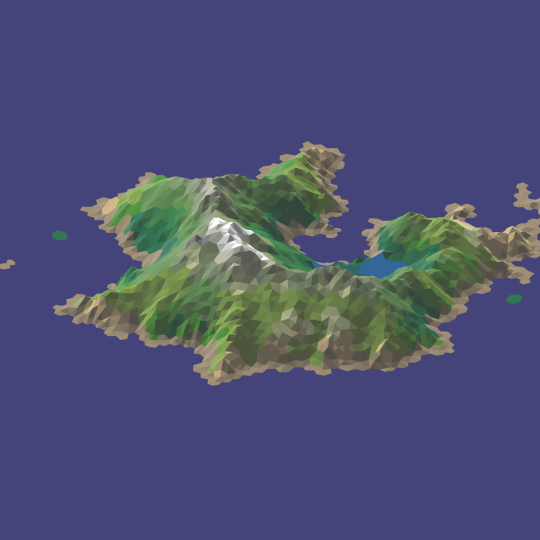
THIS IS SO COOL. You start thinking about where the capital city would be, where the most food could be grown, who lives over on that little island…it’s very cool.
To my writers – when you feel bad about your writing, when you feel like your work is dull or trite or you feel discouraged by going unnoticed, and that makes you put down your pen – remind yourself why you write. Tell yourself why you write even when you *don’t* feel discouraged. Tell yourself often: I love to write. I love telling my stories. I love these characters. Writing makes me happy.
So – hopefully – the next time you get discouraged, your brain will pick up that positive thought and tag it to the end of that negative one. So nobody reads your stories? You love to write. So your ship is tiny, or your favorite characters are unappreciated, or you’re telling a story about new characters of your own and it’s terrifying? You love to tell their stories. You feel like your work isn’t good enough? Writing makes you happy. Your voice is good and true because of that.
Keep it up. I’m right there with you, and we can do this. We love what we do.
Posted on
I must remind myself—
they can’t tell that I didn’t write this bit immediately after that one
the six months where I ignored the manuscript are not visible to the naked eye
the bit where I put my head in my hands and muttered “I have no idea what I’m doing” takes place in the single space between the period and the next capital letter.
As soon as I shove that character in, she has always been there
and someone will probably say that she’s the emotional center
and the book couldn’t have been written without her
and nobody will know that I thought of her three thousand words from the end and scrolled up and shoehorned in a couple of paragraphs near the beginning because, for whatever reason, the story needed an elderly nun
she was almost the cook
and for about ten minutes she was the earnest young village priest
and now she has been there since you started reading.
I am sanding down the places where my editor found splinters
kicking up a fine dust of adjectives and dropped phrases
(Wear a breath mask. Work in a well-ventilated area. Have you seen what excess commas can do to your lungs?)
and eventually it will all be polished to a high shine
My own belief is that one regards oneself, if one is a serious writer, as an instrument for experiencing. Life – all of it – flows through this instrument and is distilled through it into works of art. How one lives as a private person is intimately bound into the work. At some point I believe one has to stop holding back for fear of alienating some imaginary reader or real relative or friend, and come out with personal truth. If we are to understand the human condition, and if we are to accept ourselves in all the complexity, self-doubt, extravagance of feeling, guilt, joy, the slow freeing of the self to its full capacity for action and creation, both as human being and as artist, we have to know all we can about each other, and we have to be willing to go naked.