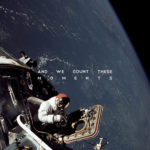
Former ISS Commander/Colonel/Astronaut Chris Hadfield talks about the orbital perspective, spiders, riding a meteorite to Earth, and the experience of becoming visually impaired during his first EVA. For anyone who hasn’t yet explored his book aptly titled “An Astronaut’s Guide to Life on Earth” or the gorgeous photographic display of planetary awe displayed in “You Are Here”, these two works of literary art – along with this TED Talk – are highly recommended and to be shared with everyone.
A gigantic government vehicle of a space program may not be the most effective route to launch our economy and our spacefaring ambitions. However, we must keep in mind that the private space entrepreneurs paving the way for more effective, continuous, and accessible means to and beyond Low Earth Orbit will enable more human beings to achieve the Overview Effect we so desperately require as we move forward into tomorrow.
Whether it’s NASA, CSA, JAXA, ESA, or the leaders of the NewSpace movement, our longevity as a species and subsequently, our segue out into the solar system and beyond will be greatly pronounced and conceptualized from those who have seen our planet from “the outside” to communicate their experiences, emboldening each of us to embrace our stewardship to the planet and all members of its crew.
Until we are all capable of escaping our terrestrial worldview and casually observing our world along with others known and unknown, we must continue to #FightforSpace.
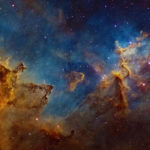
Situated 7500 light years away in the ‘W’-shaped constellation of Cassiopeia, the Heart Nebula is a vast region of glowing gas, energized by a cluster of young stars at its center.
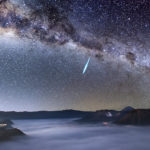
A bright meteor streaks across the magnificent night sky over the smoke-spewing Mount Bromo just one day before the peak of the Eta Aquarid meteor shower, which is caused by Halley’s Comet.
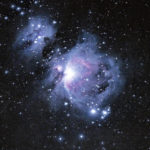
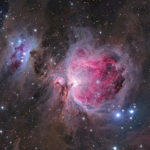
The stellar nursery of the Orion Nebula, 1350 light years away captured by 15-year-old Gray Olson.
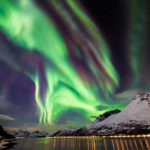
The spectacular Northern Lights unfold over a fjord, in Skjervøy, Troms, Norway.
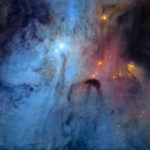
The rarely imaged core of the multiple star system, Rho Ophiuchi.
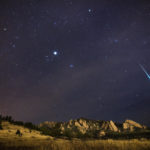
The Geminid meteor shower races over the Flatirons of Boulder, Colorado, in December 2012.
In this view of M42, more commonly known as the Orion Nebula, the photographer has emphasized the delicate veils of dust surrounding the more familiar gleaming heart of the nebula.