Ten years ago, after making piles
of money gambling with other people’s money, Wall Street nearly imploded, and
the outgoing George W. Bush and incoming Obama administrations bailed out the
bankers.
America should have learned three
big lessons from the crisis. We didn’t, to our continuing peril.
First unlearned lesson: Banking is a risky
business with huge upsides for the few who gamble in it, but bigger
downsides for the public when those bets go bad.
Which means that safeguards are
necessary. The safeguards created after Wall Street’s 1929 crash worked for
over four decades. They made banking boring.
But starting in the 1980s, they
were watered down or repealed because of Wall Street’s increasing thirst for
profits and its growing political clout. As politicians from both parties grew
dependent on the Street for campaign funding, the rush to deregulate turned
into a stampede.
It began in 1982 when Congress and the Reagan administration deregulated
savings and loan banks – allowing them to engage in risky commercial lending,
while continuing to guarantee them against major losses.
Not surprisingly, the banks got
into big trouble, necessitating a taxpayer-funded bailout.
The next milestone came in 1999,
when Congress and the Clinton Administration, under then Treasury Secretary
Robert Rubin, repealed the Glass-Steagall Act – a 1930s safeguard that had
prohibited banks from gambling with commercial deposits. (For the record, I was
no longer in the Cabinet.)
Then in 2000, Congress and Clinton
barred the Commodity Futures Trading Commission from regulating most
over-the-counter derivative contracts, including credit default swaps.
The coup de grace came in 2004,
when George W. Bush’s Securities and Exchange Commission allowed investment
banks to hold less capital in reserve.
All of this ushered in the 2008 near meltdown – which was followed by another attempt to impose safeguards, the
Dodd-Frank Act of 2010.
And now? The Street’s political
clout is as great as ever, which explains why the Dodd-Frank safeguards are now
being watered down – clearing the way for another crisis.
The second lesson we should have
learned but didn’t is how widening inequality makes our economy susceptible to financial disaster.
In the decades leading up to 2008,
stagnant wages caused many Americans to go deep into debt – using the rising
values of their homes as collateral. Much the same thing had happened in the
years leading up to 1929.
Wall Street banks were delighted to
accommodate – lending willy-nilly and often in predatory ways – until the
housing and debt bubbles burst.
And now? The underlying problem of
stagnant wages, with most economic gains going to the top, is still with us.
Once again, consumers are deep in debt – inviting another crisis.
The third big lesson we didn’t
learn concerned the rigging of American politics. After the crisis, many
Americans realized that Wall Street, big corporations, and the wealthy had
essentially bought up our democracy.
Americans saw the Street get
bailed out while homeowners, suddenly owing more on their homes than the homes
were worth, got little or nothing.
Millions lost their jobs, savings,
pensions, and homes, but the bankers and big investors came out richer than
before.
Bankers who committed serious fraud
escaped accountability. No executive went to jail. Big banks like Wells Fargo
continued to break laws with impunity.
Many officials involved in deregulating
the Street became top executives in the Wall Street banks that benefited from
deregulation. Some involved in writing the Dodd-Frank Act are now employed by
the same financial institutions that are watering it down.
Meanwhile, big corporations and
wealthy individuals continue to flood Washington with money, making it
the capital of “crony capitalism.”
Widespread outrage at all this
fueled the Tea Party on the Right and the brief “Occupy” movement on the Left.
Both eventually morphed into the two anti-establishment candidacies of 2016 –
authoritarian populist Donald Trump and democratic populist Bernie Sanders.
And now? Anti-establishment fury
remains the strongest force in American politics.
Trump has been using it to conjure
up racist and xenophobic conspiracies and to create the most authoritarian
regime in modern American history. He promised to “drain the swamp” but has
made it bigger and filthier.
Democrats don’t know whether to
simply oppose Trump and his authoritarianism, or get behind a reform agenda to
wrest control of politics and the economy from the moneyed interests.
But to do the latter they’d have to
take on those that have funded them for decades. I wish I had more confidence
they will.
Sad to say, ten years after the
near meltdown of Wall Street we seem to have learned very little. Only worse:
We now have Trump.
Republican-controlled congress also rolled back most of the Dodd-Frank Act. Wages remain stagnant as only corporations are benefiting from this “great economy”. No one is putting money into circulation; the poor and cash-strapped can’t, the rich hoard off-shore. This led up to the 2008 crisis seeing banks are letting companies and individuals run up huge debt with the low interest. It’s not a sexy situation like a “tech bubble” but it’s root causes people ignore.
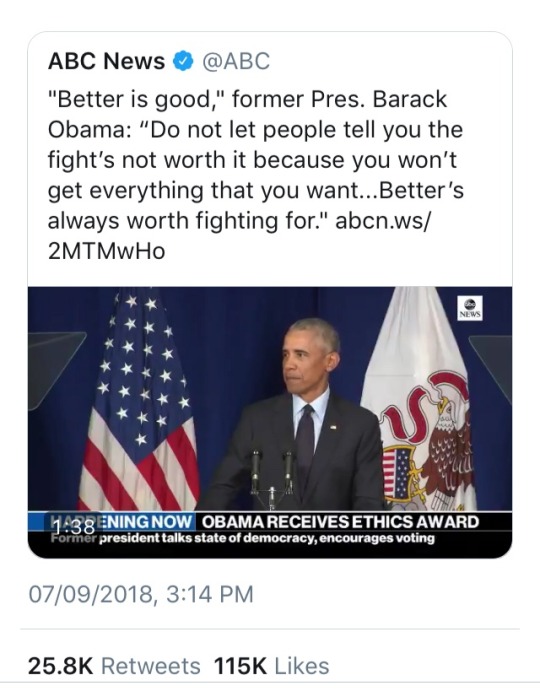
“You can make it better. Better is always worth fighting for.”
—
Barack Obama, 7 September 2018
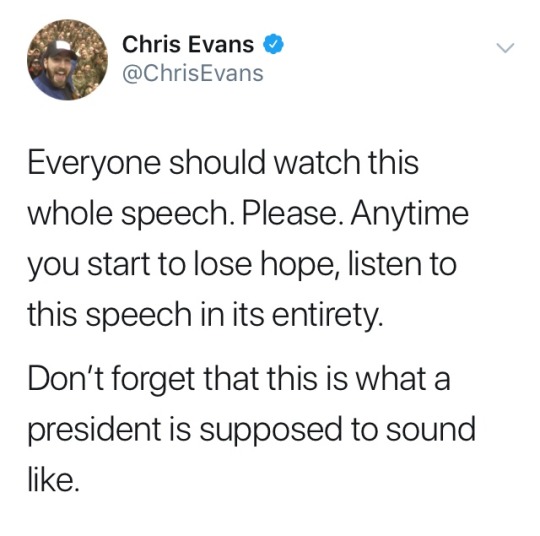
Better is good. I used to have to tell my young staff this all the time in the white house. Better is good. That’s the history of progress in this country. Not perfect, better. The civil rights act didn’t end racism, but it made things better. Social security didn’t eliminate all poverty for seniors, but it made things better for millions of people. Do not let people tell you the fight’s not worth it because you won’t get everything that you want. The idea that, well, you know, there’s racism in America, so I’m not going to bother voting, no point, that makes no sense. You can make it better. Better is always worth fighting for. That’s how our founders expected this system of self-government to work. Through the testing of ideas and the application of reason and evidence and proof, we could sort through our differences, and nobody would get exactly what they wanted, but it would be possible to find a basis for common ground. And that common ground exists.
To all the young people who are here today, there are now more eligible voters in your generation than in any other, which means your generation now has more power than anybody to change things. If you want it, you can make sure America gets out of its current funk. If you actually care about it, you have the power to make sure we seize a brighter future. But to exercise that clout, to exercise that power, you have to show up. In the last midterm elections in 2014, fewer than one in five young people voted. One in five. Not two in five, or three—one in five. Is it any wonder this Congress doesn’t reflect your values and your priorities? Are you surprised by that? This whole project of self-government only works if everybody’s doing their part. … if you thought elections don’t matter, I hope these last two years have corrected that impression.
President Obama, today.
Please please please make sure you are registered to vote. You can easily confirm your registration, file a new registration, and locate your polling place at iwillvote.com
The war on drugs is rooted in racist policies . The failure of the war and drugs is obvious. We need to find a better solution, because people of color should never be the victims of racist policies. White Americans are more likely than black Americans to have used most kinds of illegal drugs, including cocaine and LSD. Yet blacks are far more likely to go to prison for marijuana, which is not a hard drug. Moreover , even when white people get caught , they get less time in prison.
…is that Rachael Leigh Cook, the same actress who did the original anti-drug ad when she was a teenager?