
I just realized that in this godforsaken scene:
When Sherlock says “I think it could work”
He’s saying ”I think the name Sherlock Watson could work”
And then John, still laughing, realizes what he just heard and does a sort of puzzled look back up at Sherlock:
And Sherlock just:
And in conclusion, we’re not exactly looking at an aborted declaration of love.
Oh god, this hurts so good. I can’t stop feeling over this (>_<)
♥♥♥


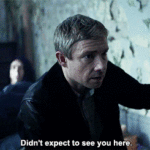
His Last Vow squee: the top 10
I was thinking about favorites and, of course, Series 3 (because everything ends up being about Series 3) and realized that my many of favorite bits of the series are in HLV. In many ways, that’s my favorite episode of the three. TEH was fresh and exciting and TSoT was funny, melancholy and touching, but HLV was unforgettable, intense, full of reversals, villainy and question marks— and passionate, epic love. This doesn’t mean it’s easy— or that I’m in a hurry to rewatch it— but nevertheless, I think it’s my favorite, the episode that was the most up my alley in terms of themes, angst-level, romanticism, and mood.
Of course, it’s also got some of the scenes I hated most in all of BBC Sherlock. My feelings about HLV were very intense in both directions, but my issues were all due to the misdirections and the emotional wallop is quite intentional, I think. It fades with time, though, but the fondness remains, at least for me. And so, I thought that given that this episode won more than one Emmy (woo-hoo!), it deserved some celebration.
So, why not: I thought I’d try to see what my favorite 10 scenes are. Or maybe just indulge in some gratuitous screen-capping, ‘cause that’s always fun, too.
1.
Sherlock looks so ridiculously, epically attractive in John’s dreams, doesn’t he? And I find it so cute that he’s dreaming about this: their beginning, Sherlock looking fabulous and untouchable as he literally hovers over John’s pillow, telling John he needed him, and he was going to show him the world. Ella would have a field day. And John’s breathing ‘oh god yes’, as if Sherlock had just propositioned him. I suppose he had.
2.
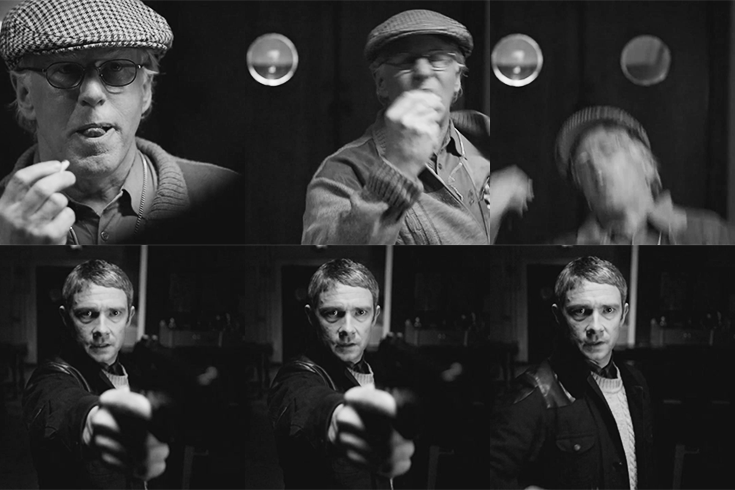
Well, John’s not going to wait around for Sherlock to come and show him a good time. BAMF!John can take care of his own needs, quite literally. One of my favorite John scenes ever. He’s the BAMFiest, and the rampant dry sarcasm makes me giggle. I also think it’s quite important that this is clearly a side of John that’s dying to come out, and logically, he’s had to have consciously repressed it recently (and that can’t last). This is the man who misses the war, and who didn’t want his wife here to see this— he wanted Sherlock. But nothing really goes John’s way in HLV, does it.


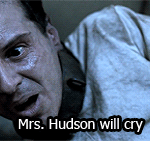
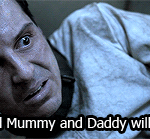
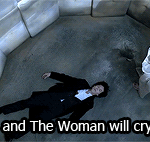



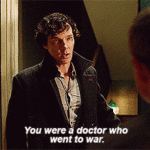
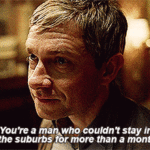
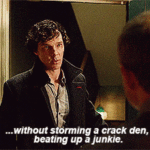
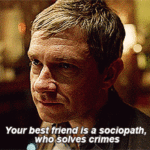
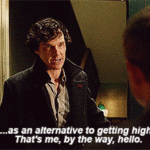
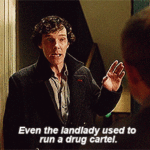
A Study in Pink / His Last Vow Parallels Masterpost
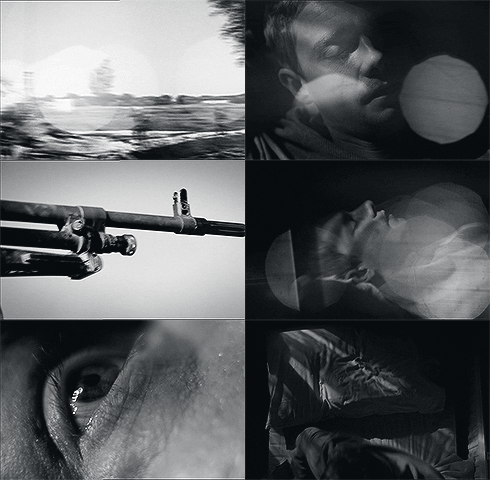
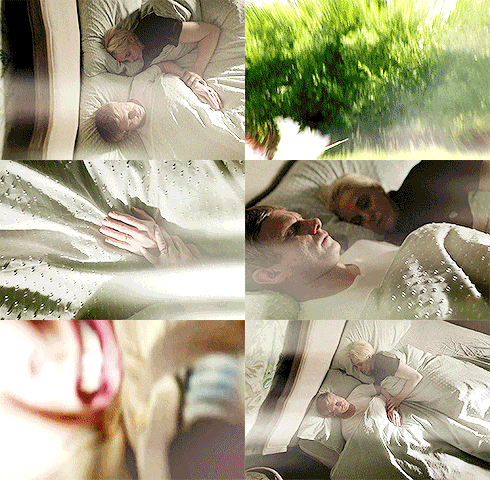
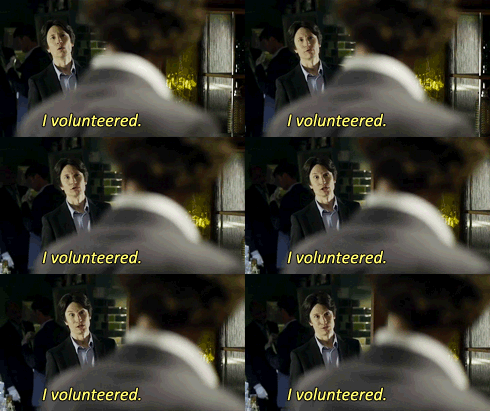
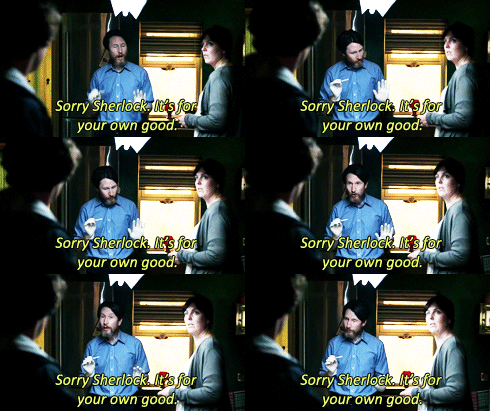
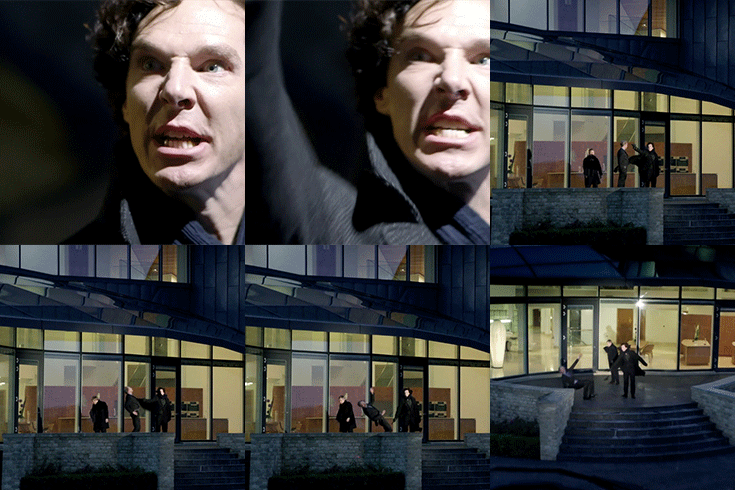
The opening nightmare (x)
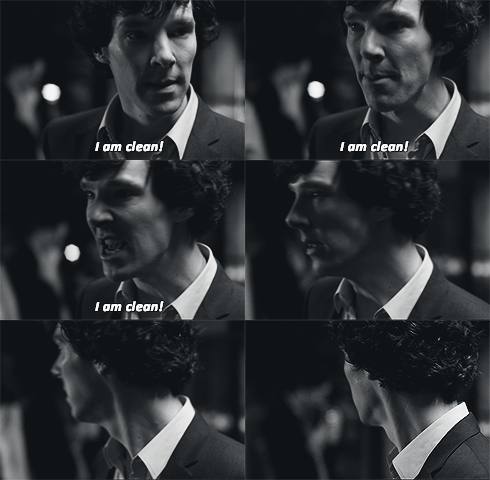
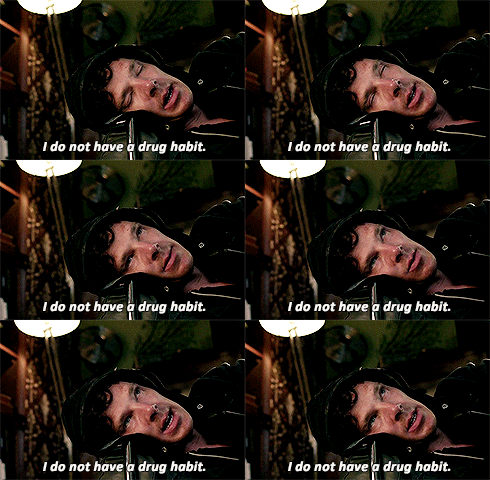
Denying the drugs (x)
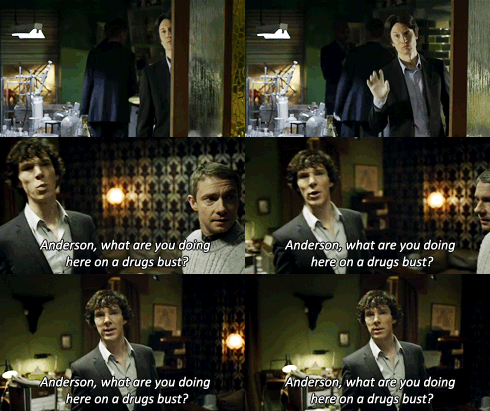
Anderson checking for the truth (x)
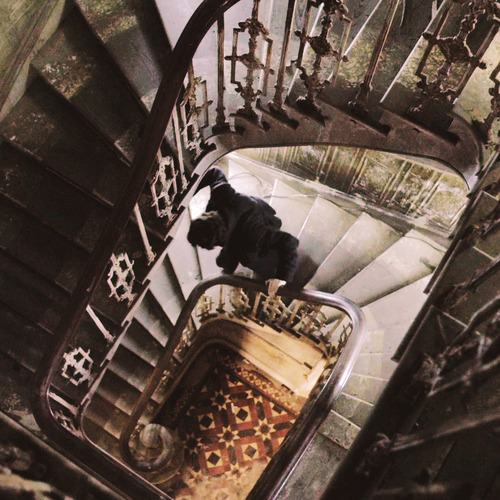
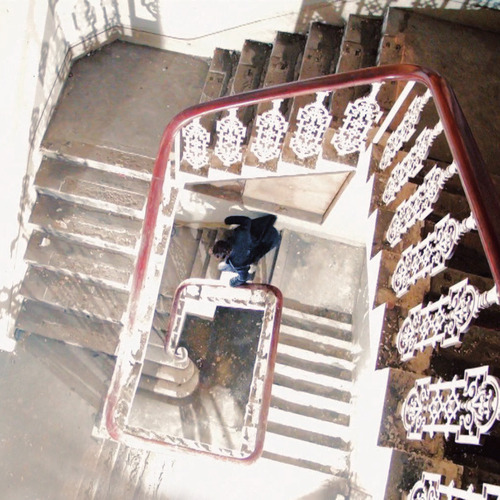
The Mind palace stairs (x)
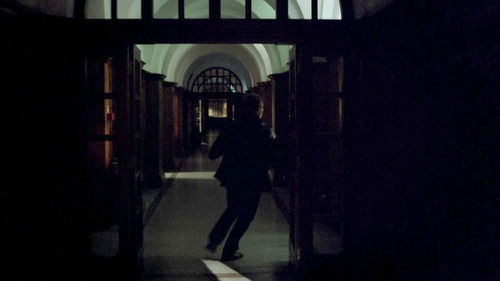
The Mind palace hallway (x)
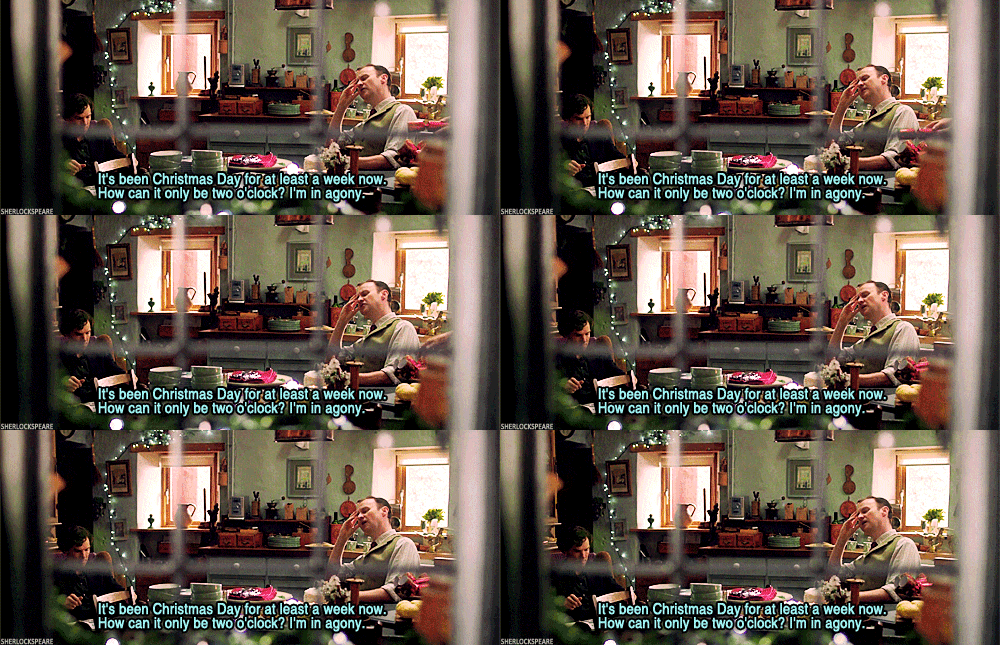
“You can Imagine the Christmas Dinners" (x)
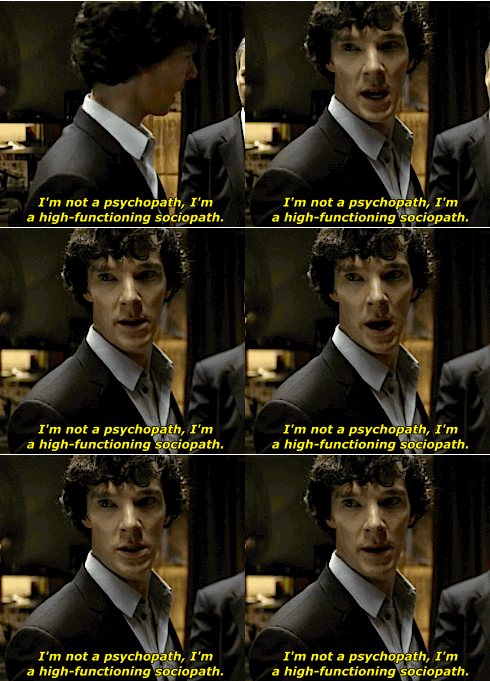
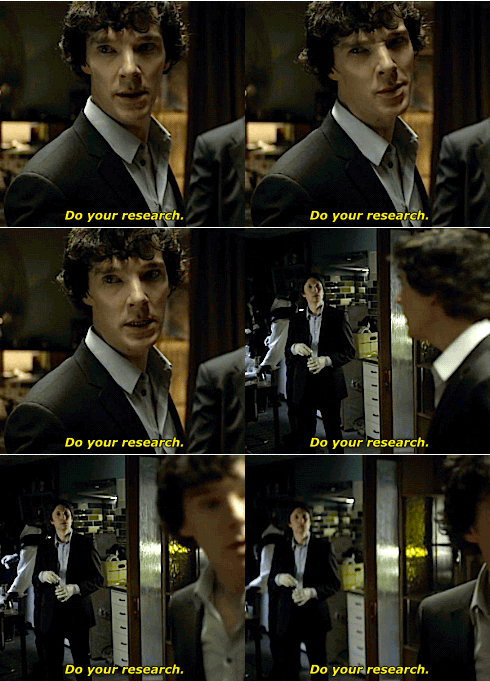
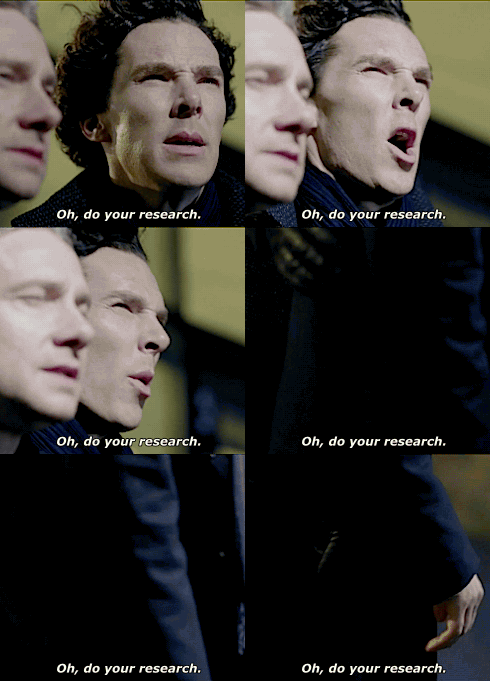
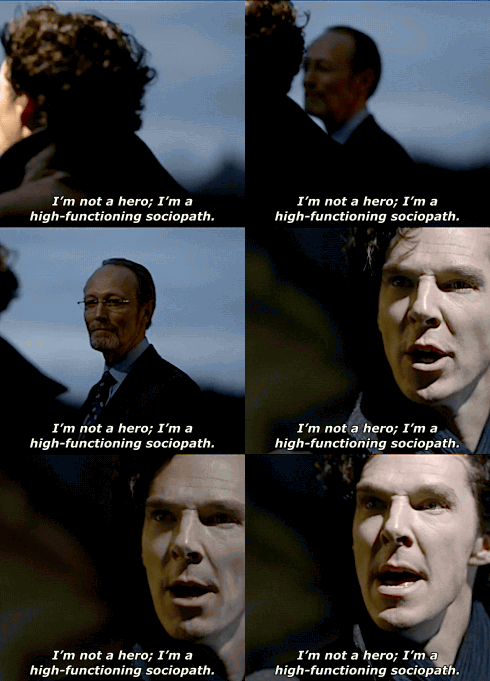
"I’m a high functioning sociopath. Do Your research" (x)
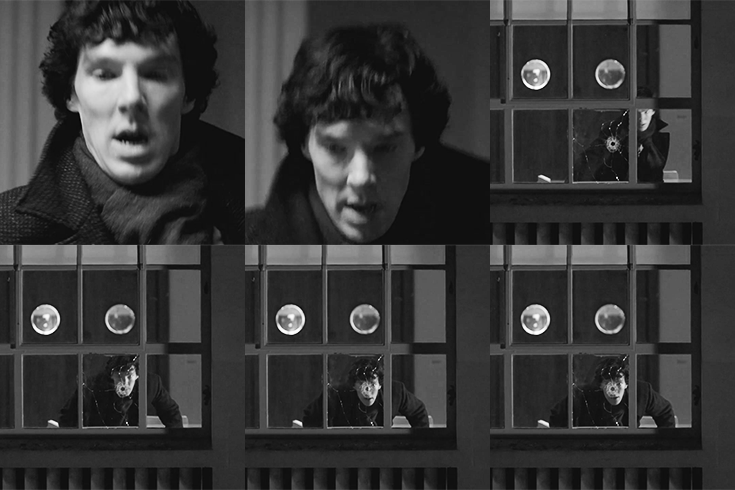
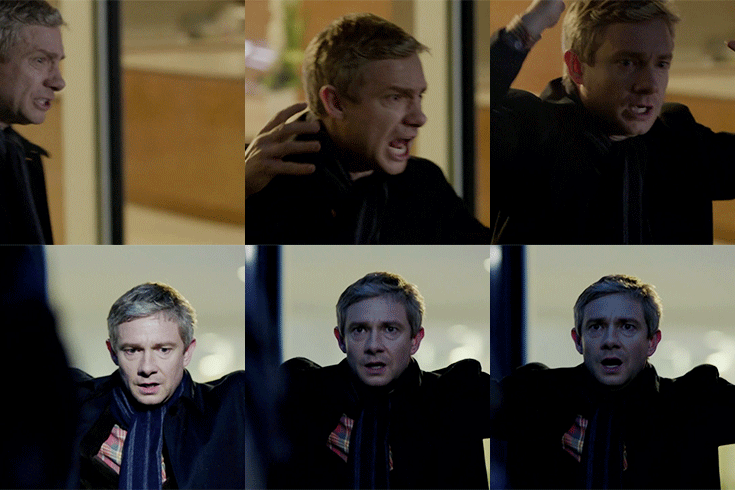
What they are willing to do to save the other (x)
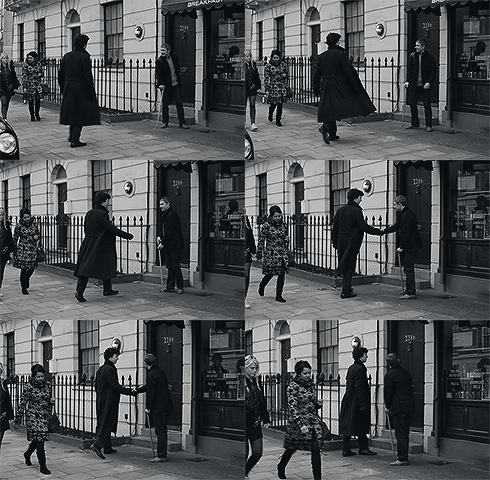
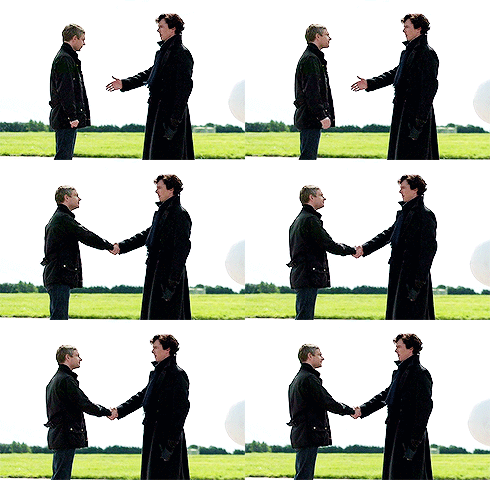
The first and final handshake (x)




I’ve complained and wondered…
I’d heard that about the script not being written, but I think they knew they were going there with her. I suspect they knew from nearly the moment they decided to bring her in that that was the sort of thing they would do with her, and the specifics probably came pretty quickly. They’ve been putting twists like that on all of the characters, for better or worse. (I wonder how BC felt about finding out Sherlock would kill CAM, too.)
This question has the potential to go deep into questions of personality and identity, but it’s too early in the morning for me to do that. I’d just like to echo the sentiment that I can’t believe they wouldn’t have trusted AA to convey whatever they wanted Mary to be if she had known about her past. This is something that AA probably would have asked herself, like, how much assassin do you want there to be in her, and if the answer had been ‘none’, she still could have acted it like that. Only then her performance would have come from a place of a more fully formed character, one that has a history, a personal narrative that she can work with.
(What really puzzles me is why they were so careful to leave all traces of ‘dark Mary’ out of the performance first two eps, but then went all “John loved her because he saw the darkness” in HLV. Because that really only works if there is some hint of that in her character (and the textual clues they gave us – the skip code and good memory – don’t read darkness.)
Maybe it really just comes down to HLV not having been written until late, so while they might have known the gist of it, this particular line of reasoning hadn’t been created at the time TEH and TSoT were filmed. To me it’s really unfortunate, though, because it sets off my bullshit detectors/conspiracy triggers like hell (There were no signs of psychopathy or dangerousness in Mary. Why is hell is Sherlock saying that? Is he fibbing? Is he making something up? Why? Is this Lazarus all over again? And so on ad nauseam.)
You know, this. They were all, “You saw the potential for darkness in Mary and it drew you to her!” but they made sure to keep any hint of it out of AA’s performance. That was definitely not well thought out on their part. They’ve tried really hard to be clever but they ended up kind of outsmarting themselves in a few places.
And that’s actually a lot of why I think Mary’s arc was poorly planned on Moffat’s part. Moffat is very, very good at foreshadowing, almost to the point that he trends to beating us over the head with things. (The Spiderman gag in Coupling, the crack in Doctor Who.) And yet there’s very little evidence of Mary’s “darker side” in the first two episodes of S3. The only clues we really have are her knowledge of skip codes and the telegram from CAM. (Sherlock’s deduction of “liar” as well as the other clues were post-production – AA says she didn’t know about them until much later, which makes me think they weren’t in the script.)
I’m sure Moffat and Gatiss had a general idea of where they wanted to go with HLV – but I suspect that in actually writing it, Moffat may have ended up going places he didn’t quite realize he’d need at the start. And certainly HLV feels…forced, in a way, like Moffat was trying to write something that didn’t really want to be written, which would explain why it has such a different feel from the other two episodes. It’s not just that it’s darker, it’s that the characters are going through motions that don’t quite ring true to how we’ve perceived them in the past.
I do wonder how TEH and TSoT would have been different, if Moffat had finished writing HLV before they were filmed, and thus had the opportunity to change them. Would we have seen a more cohesive Mary earlier on? Would it have been easier for us to accept the Mary in HLV if we’d seen evidence of her darkness beforehand? And how would knowing her backstory have influenced AA’s performance? I suppose we could debate that back and forth for the rest of our lives, and never come to a satisfactory conclusion.
This is all SO INTERESTING. Count me in as one who doesn’t think that they knew the specifics of Mary’s backstory until Moffat finished writing HLV, which unfortunately was after they shot TEH and TSoT. The bolded part above is spot on. It feels forced. In my speculative reconstruction, I would guess that the writers knew that they were going to end the series with Mary alive and well and part of the team (and close to her due date); they knew that HLV was going to be about “revealing her secret”; and they knew that they were going to end with some kind of Moriarty Returns! cliffhanger. And that was it. Part of why I think that if they had bothered to actually hash out more of Mary’s backstory, wouldn’t we have gotten more of it (sure, they could be saving it for series 4…but why? Why not give a bit more of what you have?). And the fact that Moffat basically stole bits of his River Song storyline (oh yes assassin-mixed messages-brilliant!) reminds me of when I have to give a lecture and I’m up against a deadline and I wind up reusing bits of older material rather than creating something entirely new.
To answer your question azriona, I think it would have been a lot easier to accept the Mary in HLV if it’d been part of a fully formed character we’d had hints of from the beginning. If Mary had been presented as a kind of thrillseeker/wild-child type, I dunno, all the tropes are all that’s popping into my head: shoplifting something small just for the fun of it, riding a motorcycle, firing rounds at the shooting range, and maybe even with a dangerous job. Because the Mary they gave us in the first two episodes—the caring nurse Mary, the Mary who didn’t want to hurt John’s feelings by telling him she didn’t like his moustache, a Mary who went to Sherlock for help when John was kidnapped—on its own it was thin, but it also had a long history of sweet-caring-Marys behind it: from ACD canon through to the Ritchie films. With that whole 100 years + of Mary’s characterization, it felt way too abrupt to pull out of nowhere in HLV the “no she’s secretly a thrill-seeker ex-assassin” double-cross; and then even worse to then try to put it all back and turn her back into sweet Mary who can be trusted and loved and is happily bickering about trivial domestic issues with John through her tears. Given her characterization at the beginning and end, I really wish her secret past had been something more consistent with her earlier—and later—characterization.