I didn’t know Mr. T pityed fool’s that weren’t woke, but that’s awesome. #respect
“I think about my father being called ‘boy’, my uncle being called ‘boy’, my brother, coming back from Vietnam and being called ‘boy’. So I questioned myself:“What does a black man have to do before he’s given the respect as a man?” So when I was 18 years old, when I was old enough to fight and die for my country, old enough to drink, old enough to vote, I said I was old enough to be called a man. I self-ordained myself Mr. T so the first word out of everybody’s mouth is “Mr.” That’s a sign of respect that my father didn’t get, that my brother didn’t get, that my mother didn’t get.“
Some days, weeks, or even months, you may feel as though you aren’t good at the thing you pride yourself on being good at, but these moments, however long, are still temporary — inspiration never fully dies
I think the best piece of character design advice I ever received was actually from a band leadership camp I attended in june of 2017.
the speaker there gave lots of advice for leaders—obviously, it was a leadership camp—but his saying about personality flaws struck me as useful for writers too.
he said to us all “your curses are your blessings and your blessings are your curses” and went on to explain how because he was such a great speaker, it made him a terrible listener. he could give speeches for hours on end and inspire thousands of people, but as soon as someone wanted to talk to him one on one or vent to him, he struggled with it.
he had us write down our greatest weakness and relate it to our biggest strength (mine being that I am far too emotional, but I’m gentle with others because I can understand their emotions), and the whole time people are sharing theirs, my mind was running wild with all my characters and their flaws.
previously, I had added flaws as an after thought, as in “this character seems too perfect. how can I make them not-like-that?” but that’s not how people or personalities work. for every human alive, their flaws and their strengths are directly related to each other. you can’t have one without the other.
is your character strong-willed? that can easily turn into stubbornness. is your character compassionate? maybe they give too many chances. are they loyal? then they’ll destroy the world for the people they love.
it works the other way around too: maybe your villain only hates the protagonist’s people because they love their own and just have a twisted sense of how to protect them. maybe your antagonist is arrogant, but they’ll be confident in everything they do.
tl;dr “your curses are your blessings, and your blessings are your curses” there is no such thing as a character flaw, just a strength that has been stretched too far.
This is such a fabulous flip side of what I’ve always known about villians. That their biggest weakness is that they always assume their own motivations are the motives of others.
I’ve seen many posts reminiscing about how buckwild Twilight was but somehow nobody seems to have mentioned the matching family jewelry?? that for some reason the movie’s costume designers thought it made sense that all of the kids would casually wear a family crest to school every day and nobody would say anything about it?? as if five weird antisocial adopted teenagers who skip school a lot and are all dating each other doesn’t just SCREAM cult activity??? if Charlie Swan hadn’t wanted to bang Carlisle he would have CPS on that family in a heartbeat, thanks for coming to my tedtalk
maybe that’s their trick? maybe every time they move to a small town they all take turns strutting and casually draping themselves over furniture in front of the chief of police until they figure out which one of them s/he is most attracted to and then that cullen (usually carlisle but sometimes esme. once, memorably, jasper) is responsible for keeping cps off their backs for the next five years. emmett calls it operation fuck the police.
This is a friendly reminder that creators and publishers alike are very ok with fanfic and fan art (in particular, I am very fond of the existence of fan art), but when you charge money or accept donations (i.e. take in money) for fan fiction, you’re violating the copyright of whichever content you’re writing for.
I know it might not seem different, but the moment you’re writing about my characters for money, that’s … what I have a contract to do. I can’t even write about those contracted characters for money without getting permission from my publisher to do so.
I know it sucks to try to make it as an artist, but as artists, we’ve got to respect other folk’s work. So remember, fanfic for the fun of it, charge for your OCs.
urs,
Stiefvater
To put a super fine point on it, apart from the legal aspect: this is my
job. I pay my bills by writing stories about characters I pulled from
my dreams. Please … don’t take my job? Put the unique characters you
pulled from YOUR dreams out there when money’s on the line.
Okay, but you’re treating fan fic as if it’s separate from fan art in this respect.
Let’s be clear, it’s not.
I’m going to lay some groundwork for copyright law in regards to the creation and distribution of fan work.
(By the way, my argument here is mostly going to be discussing fan art because I have more examples at the ready, but really, it applies to fic, too. The medium doesn’t change the potential for legal application to copyrighted material.)
Making fan art and fic is perfectly legal, and sharing it is grand as long as the creator isn’t Anne Rice. Selling it is where things get dicey because, yes, using copyrighted material to turn a profit is illegal, regardless of whether the content is fic or art.
So why do we see artists selling fan art and not getting in trouble, even in public spaces like artist alleys at conventions? After all, over half the work for sale in artist alleys are fan works.
Well, from a technical standpoint, they should be sued for infringing on copyrighted material. That’s the stark, black and white viewpoint.
But fan content is an incredibly gray area, which is why there are lawyers dedicated specifically to protecting artists–meaning, both the original creators and fan creators.
And let’s remember most copyright holders are fans of other content, too. They aren’t strangers to fan communities, and they have good reason to let them grow. Fans are incredibly supportive by discussing and building/maintaining hype for original content, which turns into profit as more and more people become aware of the official work. More attention turns into more fans and more people willing to spend money on official products.
Original creators want to support their fan bases as much as fans want to support the official content. Fan art and fic help keep interest in the original content alive, and when it’s free to consume, fan content clearly isn’t taking away from potential profits owed to the original creator.
When fan content is being sold, it’s taking away potential profits. This is often the hard line drawn when fan creators get in legal trouble. (It’s not the only potential line crossed, but this is going to be long enough already.)
Remember how I said fan content is a huge gray area? Depending on circumstances and the right lawyer, the fan creator isn’t necessarily in the wrong. Or at least, not as wrong as you might think.
What really makes this area so gray is the transformative nature of fan content. Illustrating or writing a scene already present in the official work is pretty different from an exploration of familiar characters in an alternate universe. And even if you’re exploring a scene already present in canon, what if you explore it from a completely different perspective? How true to character is the depiction? Is the style of writing or painting similar to the original or completely different?
If the fan content is so different from the original, how accurately can someone claim the fan stole potential profits?
A big part of the answer to that question is: how much did the fan profit? And how significant was the profit in comparison to the official work?
…and quite honestly, how much can the copyright holder be bothered to care?
Taking someone to court is a pricey venture, and if the fan’s profit isn’t relatively significant… it’s straight up not worth the time, money, stress, and potential negative publicity.
The larger a fan base, the harder it is to police its activity. Disney has one of the strongest (read: most aggressive) legal departments as a creative company, and they have their work cut out for them. They’ve now built up such a reputation that many artists won’t risk being found out.
Anime fans who aren’t in Asia have a pretty good shot at not getting in legal trouble simply because the copyright holders would have to put in a lot of effort to find and prosecute international fans, as well as the dance between the separate nations’ laws. That’s a lot of extra work for a creative product that’s already successful enough to be translated and distributed overseas. Also, marketing is pretty expensive. Why not let the fans do the work for them? No, it might not represent the work accurately, and yeah, the fan might make a few bucks that could have gone to an official marketing team, but in the long run, it often still leads to official profits. Familiarizing potential audiences and projecting an image of popularity leads to actual popularity from actual audiences.
And fan bases serving as an unofficial marketing team is a pretty cost-effective strategy at the end of the day.
I’ve gotten away from op’s point a bit, which specifically discusses profits gained by fan writers, and I generally agree with the sentiment.
Namely, I agree with not using other creators’ original content for personal profit when the original creator could not comfortably sue me for doing so.
Let’s say someone wanted to commission me to write a Homestuck fic. I wouldn’t do it. Andrew Hussie and his team are their own distributors and have limited channels of gaining profit, even with the large fan base. (For this example, I’m ignoring the go-fund-me donations.)
However, if someone commissioned me to write a Harry Potter fic? Damn right, I’d take it. J.K. Rowling is not hurting for money, and any profit I gained in that venture would mean absolutely nothing to her.
Everything is relative, and in essence, copyright law is fifty shades of gray.
I’m reblogging this commentary because I’ve gotten a lot of questions about where fan art falls in this, and whether this is an ethical, legal, or financial issue, and also to highlight this again: “Making fan art and fic is perfectly legal, and sharing it is grand as long as the creator isn’t Anne Rice. Selling it is where things get dicey because, yes, using copyrighted material to turn a profit is illegal, regardless of whether the content is fic or art.”
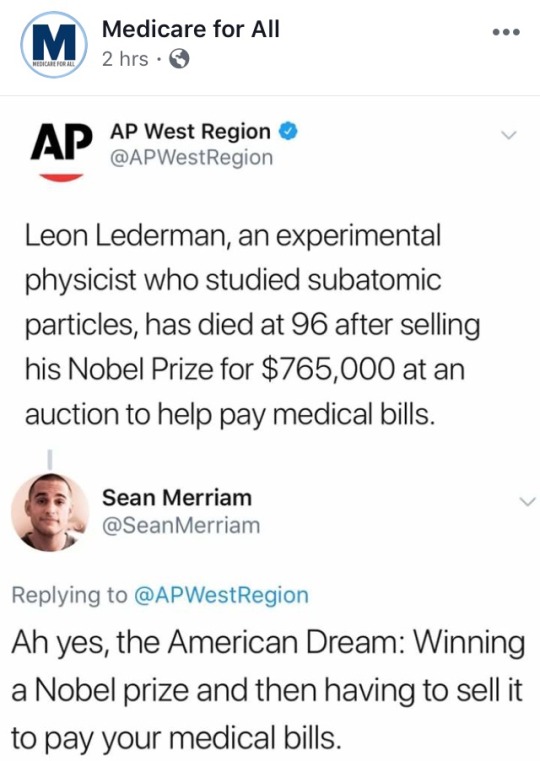
working class person: I’m forced to beg for money and am at the mercy of other people’s goodwill as I’m facing serious suffering and/or death because my wages don’t cover the expenses I need to literally stay alive
friends of working class person: we will scrape together some of our own funds at the possible detriment of our own families because we have no other choice if we don’t want our friend to, and we can’t believe we have to say this out loud, die
media: This Uplifting Story of Friendship Will Brighten Your Day :)) Look As These Brave People Go On Happy With Their Lives Despite Hardship :)) This Story Proves That Poor People Who Complain About Their Standards Of Living Are Just Not Trying Hard Enough :)))
this post was sandwiched on my dash between two people’s medical gofundmes and i want to cry
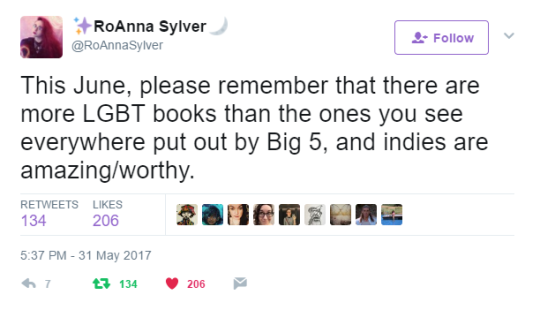
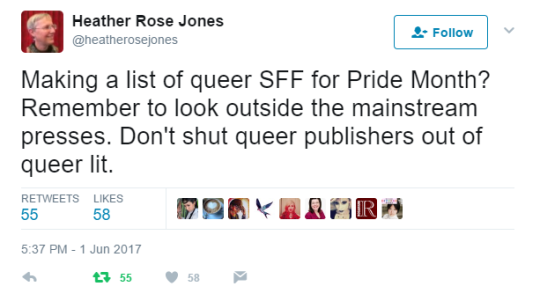
[image description: a tweet from RoAnna Sylver (@RoAnna Syvler) reading “This June, please rememeber that there are more LGBT books than the ones you see everywhere put out by the Big 5, ad indies are amazing/worthy.” The next reblog is a tweet from Heather Rose Jones (@heatherrosejones) reading: “Making a list of queer SFF for Pride Month? Remember to look outside the mainstream presses. Don’t shut queer publishers out of queer lit.”]
Here’s a bunch of Goodreads lists that might help!