
things linguistics has taught me: do not frell with the welsh
Yay for Welsh!
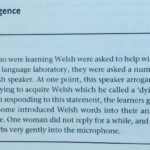
I toyed around with it for a while, got a handle on the basic grammar and actually learned how to pronounce it (more or less), but there’re practically no Welsh-learning resources available for cheap or free in America, so I didn’t get to a reading or speaking level.I love, love, love the dynamics of language and power that this experiment demonstrates! The RP-standard speaker is in a position of enormous privilege by way of his gender, the language he’s speaking (English), and the register he’s speaking in — received standard, the language that stands as a cultural signifier of education, sophistication, intelligence, and a whole host of other things. The utter domination of that language and the cultural and political history that goes along with it began almost a millennium ago. The RP speaker’s challenge isn’t solely about a language; it invokes that language’s association with the systems of power that have functioned and continue to function as oppression.
The people learning Welsh respond to that exertion of power by defensively asserting their own cultural identity. It’s a kind of aggressive dis-identification. The ones that respond by speaking Welsh terms and conjugating verbs are using a language that the RP speaker (or the person they perceive as the RP speaker) likely doesn’t understand. Even though it’s a study and the structure is artificial, the dialogue is constructed, all that, part of the dynamic is to make him feel like a foreigner, and I love that.
That, friends, is how to use language as a tool of resistance.