the princess bride is exactly what a dnd campaign would look like as a movie like? the delightfully weird cast of characters with their own quirks, the strange pacing and narrative that still Works, the absolute absurdity of it all, the jumping back and forth between wanting to be serious and it being really funny, hell its even Told like a dnd story through the use of the grandfather being the one telling the story
what a fantastic fucking movie
also like the character backstories are SUCH dnd backgrounds like? “im out for revenge for my father who was killed by a guy with six fingers on one of his hands” “i bumped into a band of pirates and their leader liked me so much he ended up having me take on his title to retire”
that is the Exact shit that people come up with for dnd characters
DM: having narrowly escaped Humperdinck, you find yourselves in the dangerous Fire Swamps
Westley: do I know anything about this area? Any danger?
DM: roll a history check
Westley: 15
DM: you know of rumors of giant rats in the swamps, as well as quick sand
Westley: what do I know about the giant rats?
DM: roll nature
Westley: [nat 1] …… rodents of unusual size? I don’t think they exist
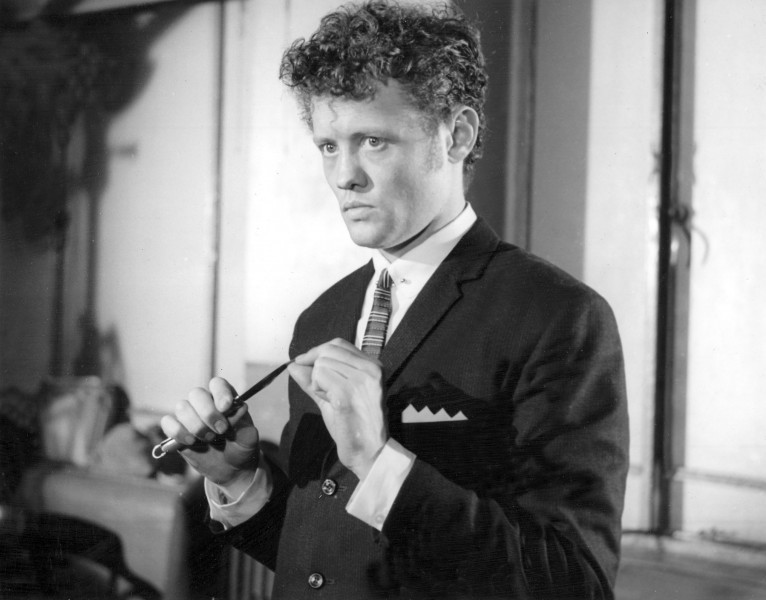
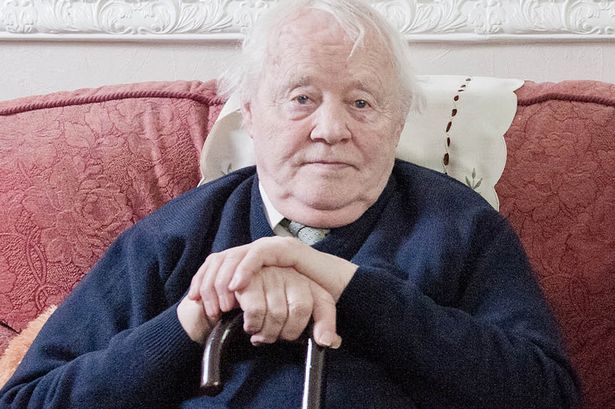
An instantly recognisable figure in his many, many appearances on screens small and large, with his wiry figure and shock of curly hair, Dudley Sutton – who has died, aged 85 – was the archetypal character actor. He was rarely a lead, but in more than 150 credited roles he carved for himself a long career of solid support roles and mischievous scene-stealing.
Born into a working class family in Surrey, in 1933, Sutton’s early years were characterised by youthful rebellion and a sense of being an outsider. Winning a place in a Hertfordshire boarding school, the young Dudley was instantly an outsider – his social background being markedly different to his fellow pupils. His cherubic features probably didn’t help matters, and his first taste of the stage was playing a female role in a school production. He was, however, smitten with acting. He continued to act in his first job, having joined the RAF straight from school. It was here that he was first encouraged in his chosen path, as an RAF education officer pushed him to apply for RADA.
He did, and was enrolled in 1955, but again he was to feel like an outsider looking in; RADA was still, at this point, a very elitist school. The plays studied only served to reinforce class prejudices, and the structure was distinctly hierarchical. Sutton quickly began to lose faith in the school, pursuing his own interests – reading philosophy, listening to rock music and generally being drawn to the Soho scene of the late 1950’s. He took a job in a coffee bar, befriended teddy boys and smoked weed. Perhaps inevitably, he was dismissed from RADA.
It might have been the best thing that could have happened to him. Some time earlier, Dudley had visited Joan Littlewood’s now legendary Theatre Workshop; he was now free to join the company. These were exciting times in British theatre, and Sutton found himself working with contemporaries like Yootha Joyce and Richard Harris, and befriending playwrights Joe Orton and Brendan Behan. His relationship with Littlewood herself was tempestuous – he thought her sentimental, she dismissed his public schooling and, ironically, middle class sensibilities – but professionally he was flourishing. He was Malcolm, to Harris’ Macbeth, in a production that played the Moscow Arts Theatre in 1957, and was part of the original cast in Orton’s Entertaining Mr.Sloane at the New Arts in 1964.
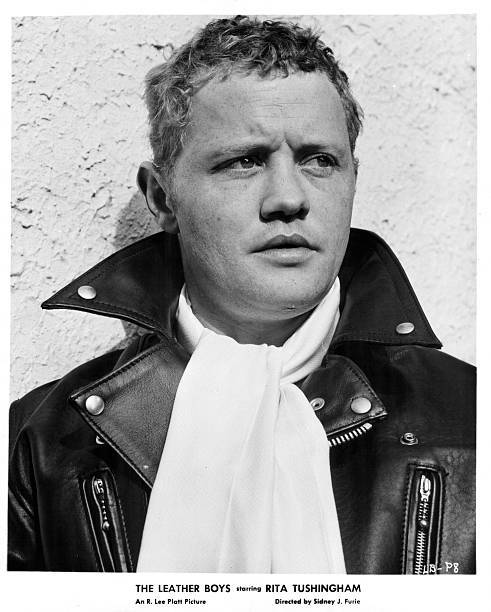
The latter play had some significance for Sutton (“To fight the demon of homophobia with a West End comedy was brilliant”): although not gay himself, the actor had made numerous gay friends and, seeing them belittled and humiliated publicly, became a passionate supporter of legalising homosexuality. Two notable early film roles showed the courage of his convictions – in The Boys (1962) and The Leather Boys (1964), both for director Sidney J. Furie. The later film, in particular, is now considered a landmark in queer cinema, with Sutton playing a gay biker whose unrequited love for the male lead drives much of the action.
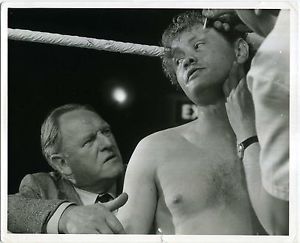
Film roles were, however, fairly scarce. At this point, Dudley began to carve out his place as a TV guest star extraordinaire; there was a well received villainous turn in The Saint (1964; Roger Moore later named him as his favourite villain), a nuanced role as a troubled young boxer in The Human Jungle (2.5, RingOf Hate, 1965), and appearances in The Baron (1967), The Avengers (You’ll Catch Your Death, 1968) and a wonderfully unbalanced gangster in Randall And Hopkirk (Deceased) (1.18, Could You Recognise The Man Again?, 1970 – reuniting him with Mr. Sloane costar Madge Ryan).
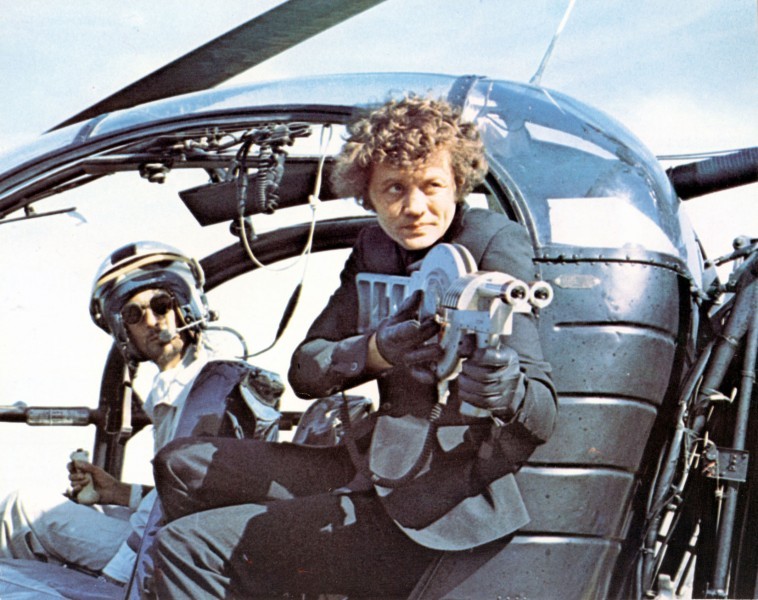
Film roles did follow – notable support in Ken Russell’s cause célèbre The Devils (1971) and Fellini’s Casanova (1976) as well as genre fare like Madame Sin (1972), No. 1 Of TheSecret Service (1977) and The Island (1980) – but Sutton was best served by his TV work. There were episodes of Thriller and TheSweeney (both 1975), Tales Of TheUnexpected (1980) and Strangers (1980). Gradually, as he aged, Dudley was less commonly cast as villains and started to play a wider selection of roles. He was Mr. Carter, the brilliantly deadpan, sardonic colleague of Trevor Chaplin and Jill Swinburne, across Alan Plater’s seminal Beiderbecke trilogy (1985 – 1988), and became one of the few actors to appear in both the original and the comedy reboot of Randall & Hopkirk(Deceased) (2000).
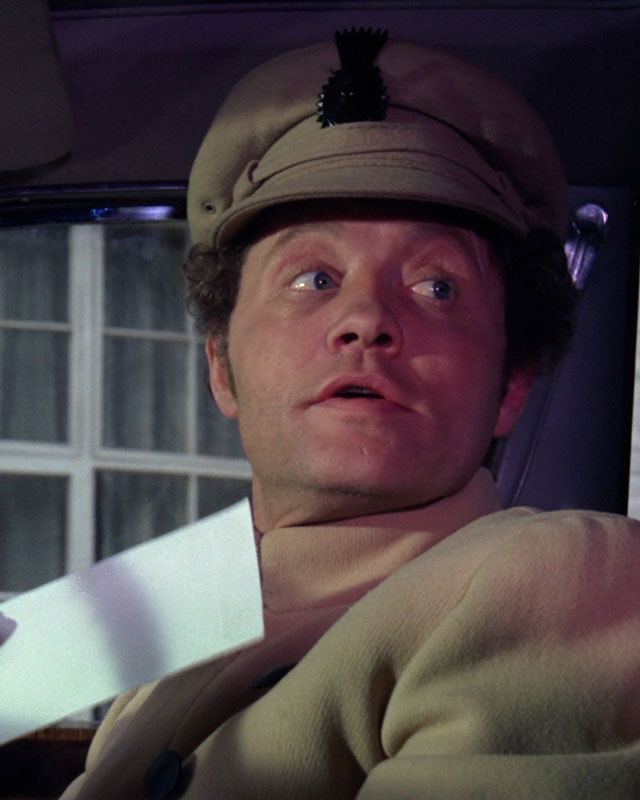
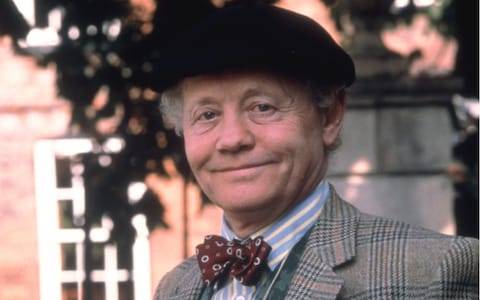
It was in 1986, though, that Dudley Sutton was to find lasting fame. When offered the role of Tinker Dill, barker, tout, friend and confidante of roguish antiques dealer Lovejoy (1986 – 1994), Sutton turned it down. The script called for a dirty, shabbily dressed man, and Dudley – who then lived opposite the antiques market in Chelsea – thought the part unrealistic. Compromises were made, and soon the character was dressed in tailored, tweed suits with handkerchiefs and a snazzy beret – much more true to the figures Dudley saw on a daily basis. The show was an instant hit, and Sutton made the part of Tinker his own – Dill was the only character besides Ian McShane’s titular dealer to be present throughout the series’ run.
Dudley continued acting into his later years, for stage and screen. In 2003 and 2006 he took one-man shows to the Edinburgh Fringe, and last year appeared in Steven Berkoff’sTellTale Heart. He was also an accomplished poet, and well known raconteur with many friends within the industry and without. He was married four times, and is survived by three children.
“Acting, for me, has always been a reaction – a neurotic reaction to life. When life gets too puzzling I start acting.”
I think the problem the Doctor has with Jack Harkness is he doesn’t see how Jack has changed and he doesn’t think Jack needs him like his other companions need him.
1) Obviously the Doctor and Rose met Jack when he’s more irresponsible and more like John Hart. Jack spent the majority of the first two episodes trying to convince the Doctor what was happening wasn’t his fault. That, trying to con them, and “You got to set an alarm for Volcano Day. [laughs]”
Of course the Doctor sets everything right, and Jack takes responsibility for what he done by getting rid of the bomb for them.
Jack Harkness thought for several moments he was legitimately going to die. He never considered the strange man he met would save him, so he drinks a martini and says goodbye to the only company he has (a computer)
When he mentions how the Doctor’s ship is bigger on the inside the Doctor replies “You better be.” Jack enters the TARDIS needing to prove himself.
I believe this first impression sticks with the Doctor forever. He views Jack as some sex-driven, conning, and selfish man and for awhile it might be true, but Jack changes.
2) Jack is very different to any other companion we’ve seen because of his abilities with technology and ability to take care of himself and others. We see him doing repairs on the TARDIS console in “Boomtown”, something we’ve only seen the Doctor do, and in the same episode when Jack specifically names the alien device the Doctor replies “Couldn’t have said it better myself.”
In “Bad Wolf” and “The Parting of Ways” we see Jack in his element. He escapes his game with no help (?), makes weapons, help the Doctor (specifically taking care of him when he thought Rose was dead), figured out Rose wasn’t dead, inspired people on the Gamestation to fight, and when confronted with certain death faced it bravely.
When the Doctor sent Rose home, he didn’t do the same for Jack. I think he thought he was useful. I think he thought Jack was better prepared and understood what would this battle entail. I think at his core the Doctor thought Jack was more expandable, even mortal, than Rose was. Maybe Jack thought he was too.
Jack was willing to die for the Doctor, and he did, and his faith was awarded by the Doctor leaving him behind.
The Doctor thinks the now immortal Jack is wrong. I can almost see his excuses for abandoning him now: he’s wrong and he’ll be okay anyway. He knew Jack could get off the Satellite since he’s so resourceful. He thought Jack would be okay emotionally because he’s Jack. Flirty, easy-going, tough as nails Jack Harkness.
I think at this point the Doctor becomes completely awful at understanding Jack’s emotions.
Jack changes over the course of ~130 years. He’s faced trauma after trauma. He’s lost so many people he’s loved. He’s so incredibly, achingly lonely. He’s trying so hard to be more like the Doctor, and he is, but not the parts he wants to be like.
And you’d think the Doctor would notice. In Torchwood season 2 episode 10, a little old lady sees Jack’s eyes are “older than his face” and that means he “doesn’t belong anywhere”. You’d think the Doctor would see this too, since the same is true for him, but I think the Doctor doesn’t. I think the Doctor sees Jack as the same useful although scheming former Time Agent. But now wrong, but now working for the institute he abhors.
And he uses Jack. He uses him over and over and Jack dies more in those episodes he was with the Doctor and Martha than all of Torchwood season 1. Jack let’s himself be used. And there’s nothing the Doctor can do about his immortality, or his slow aging.
Jack Harkness tries his best to be good. Sometimes he fails, and sometimes he fails spectacularly but he wants to protect as many people as he can. In Torchwood we see him as a deeply traumatized asshole. He carries responsibility in a way we’ve never seen him do before. We see him carry the responsibility of Torchwood, of his team’s fate, of the world’s safety. We see him so deeply care about his lovers and friends, and we see him so easily take blame onto himself. We don’t see that in 9’s season. After meeting the Doctor and Rose Jack opened his heart, and it’s been broken again and again, but he still tries. He’s a human. He’s a 51st century human and an immortal one at that, but he’s a human being that can be incredible and incredibly dumb.
I think the Doctor forgets that. Jack is wrong, Jack is thick skinned, Jack is easy going. Jack let’s him use his immortality.
The Doctor still sees Jack as that man he met during the London Blitz. He doesn’t see Jack for who he is now.
The only character devolpment he sees in Jack is his “wrongness”.