There are a lot of things that go into creating a compelling action scene. One of the most basic principles is something that doesn’t really have an agreed-upon name, but I’m going to borrow a term from one of my writing teachers and call it Good News/Bad News. It’s a shorthand term for the reversals of fortune that make an action sequence exciting, the alternating moments of “FUCK YEAH!!” and “OH SHIT!!” that take us on an emotional rollercoaster during a fight or a chase or a battle.
I could use any of the action sequences in Fury Road to demonstrate how this works, but the fight between Max and Furiosa is a nice clean and simple (for this movie) example.
Let’s say we’re rooting for Furiosa in this fight. It starts with Bad News: strange dude rolls up threatening them with a shotgun.
Furiosa decides to attack, tackles him and gets the gun away from him in one move. Good news!
But the gun doesn’t fire. Bad news!
But she can still use it as a club. Good news!
But Max gets his shit together, grabs her throat and flips them, trying to pin her. Bad news!
But Angharad pulls Max away using the chain. Good news!
But he takes the gun with him. Bad news!
But Dag’s on point with the bolt-cutters. Good news!
And so on and so on; you get the idea by this point.
Most action sequences rely on this dynamic to some extent. The rhythm might be more “good news-bad news-bad news–BAD NEWS!!!” if our protagonists are in a jam, but the reversals of fortune are what keep things interesting.
Tweaking the ratio of good news to bad news creates different effects. Too much good news can make your hero seem invulnerable or like the fight is too easy for them, but a streak of good news after a long run of bad news can create a powerful breath of relief and euphoria at things finally working out for our protagonist. (Think of the War Rig’s engine revving up again at a particularly bleak moment in the final chase.)
Create a really long string of mostly bad news and you have a horror movie. But a scene or sequence that’s nothing but bad news can have diminished returns, or make it feel like your protagonist is passive or doesn’t have any agency.
(I could write a whole other post about how to create a sense of agency for a character who’s in a situation where they can’t physically fight back. For now I’ll just say that someone struggling to turn the situation to their advantage in whatever way they can, even if they end up losing, feels a lot different for the audience than someone just suffering an endless string of blows from their opponent.)
One of the things that makes the action in Fury Road so fantastic is the truly blistering pace of reversals of fortune the movie achieves. In the fight between Max and Furiosa, almost every move is a reversal of who’s on top–metaphorically and often literally. The fight is only two minutes long from start to finish, but it feels like a major set piece because almost every move in the fight is a new beat in the emotional story the action is telling us.
The unrelenting speed with which all the action sequences in Fury Road flip between good news and bad news is part of what makes them feel so exciting, and also so genuinely dangerous, because we’re made to feel like we’re one move away from disaster at all times.
Once again, all good action sequences do this to some extent. Fury Road just does it really, really, really well.
can someone explain the alignment chart for me but in like, the simplest wording possible lmao
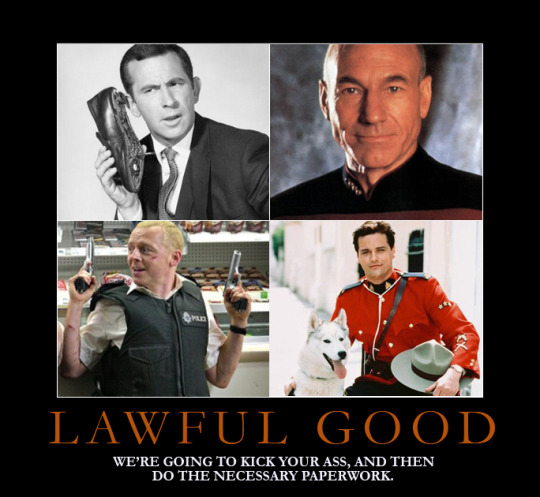
lawful good: i want to do the right thing, and following society’s rules is the best way to do that
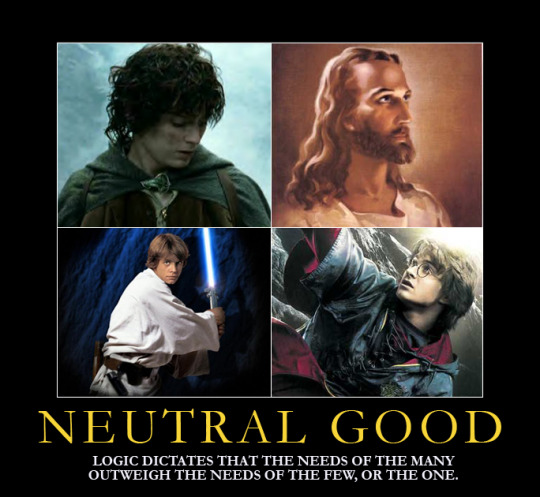
neutral good: i want to do what’s right, and i’m willing to bend or break the rules as long as no one gets hurt
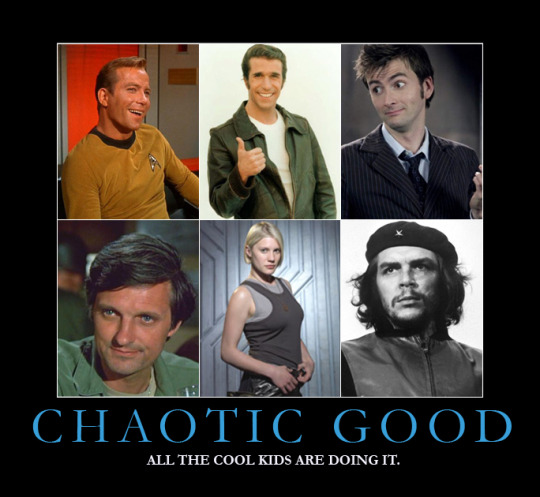
chaotic good: i’m willing to do whatever it takes as long as it’s to do the right thing
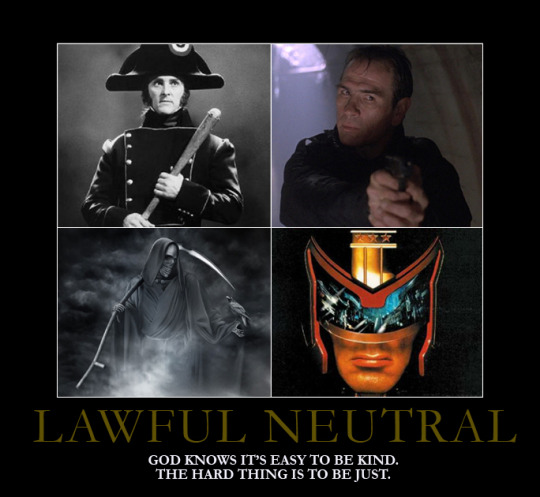
lawful neutral: following the rules of society is the most important thing, and that matters more to me than doing what’s right
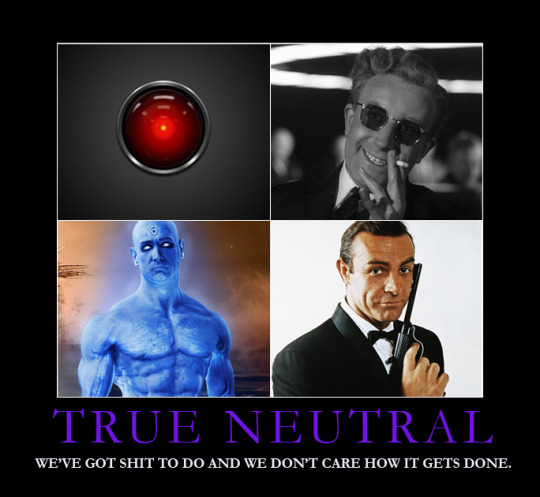
true neutral: i just want myself and the people i care about to be happy
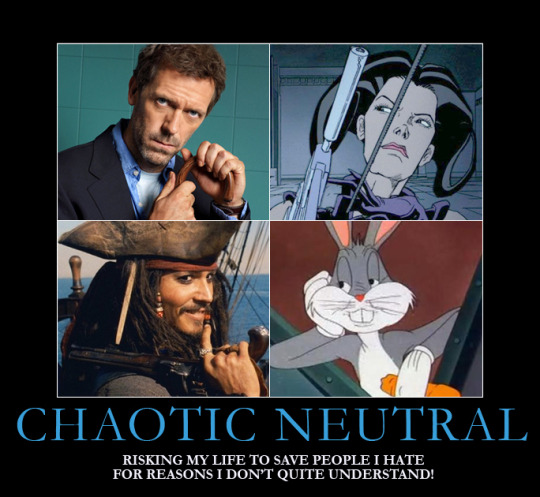
chaotic neutral: i want my freedom, and i don’t care what i have to do to keep it
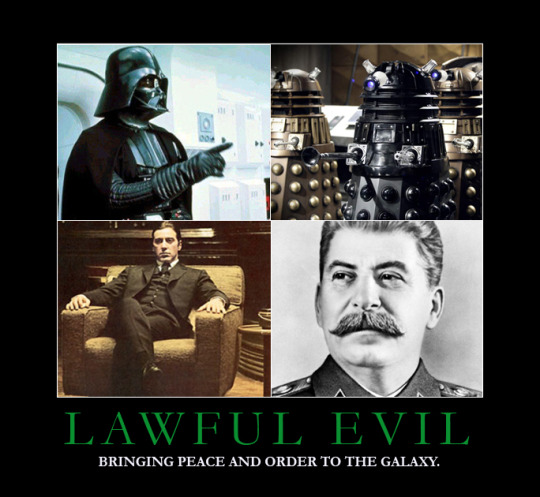
lawful evil: to impede the protagonists (in whatever evil way) is my primary goal, but i follow my own code of morals even when it’s inconvenient
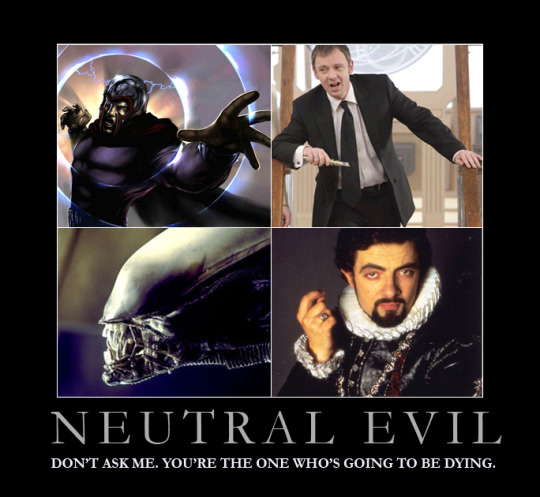
neutral evil: to impede the protagonists (in whatever evil way) is the my primary goal, and while i’ll do what it takes to achieve it, i also won’t go out of my way to do unnecessary damage
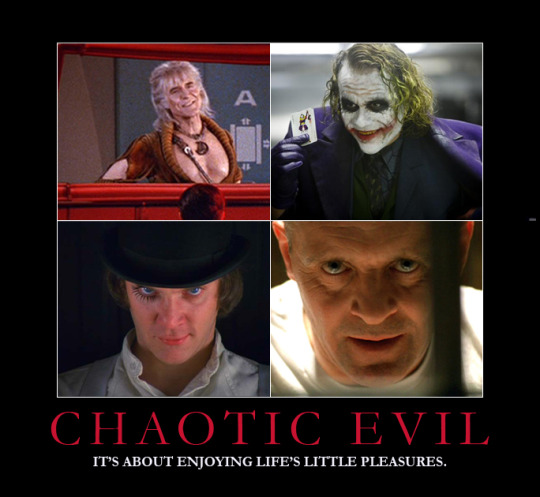
chaotic evil: i relish in destruction and want to do as much damage as possible while i try to achieve my primary goal
Here is a handy visual guide I made a while back. Part of my intention was to show the variety of ways that each of the alignments can be represented:
You can see/reblog my original posts here, here, and here.
but can we consider that Rhodey does, in fact, outrank Steve Rogers?
now picture rhodey meeting steve and steve snapping a salute
that is all
and Rhodey would be totally serious about it until the second Steve walked out of the room and then he’d totally turn and look at Tony with crazy eyes and Tony would be like “JARVIS TOOK PICTURES FROM EVERY ANGLE YOU’RE WELCOME”