My wife, Zoe, is transgender. She came out to us — the kids and me — last summer and then slowly spread her beautiful feminine wings with extended family, friends, and neighbors.
A little coming out here, a little coming out there — you know how it is.
It’s been a slow, often challenging process of telling people something so personal and scary, but pretty much everyone has been amazing.
However, she dreaded coming out at the office.
She works at a large technology company, managing a team of software developers in a predominantly male office environment. She’s known many of her co-workers and employees for 15 or so years. They have called her “he” and “him” and “Mr.” for a very long time. How would they handle the change?
While we have laws in place in Ontario, Canada, to protect the rights of transgender employees, it does not shield them from awkwardness, quiet judgment, or loss of workplace friendships. Your workplace may not become outright hostile, but it can sometimes become a difficult place to go to every day because people only tolerate you rather than fully accept you.
But this transition needed to happen, and so Zoe carefully crafted a coming out email and sent it to everyone she works with.
The support was immediately apparent; she received about 75 incredibly kind responses from coworkers, both local and international.
She then took one week off, followed by a week where she worked solely from home. It was only last Monday when she finally went back to the office.
Despite knowing how nice her colleagues are and having read so many positive responses to her email, she was understandably still nervous.
Hell, I was nervous. I made her promise to text me 80 billion times with updates and was more than prepared to go down there with my advocacy pants on if I needed to (I might be a tad overprotective).
And that’s when her office pals decided to show the rest of us how to do it right.
She got in and found that a couple of them had decorated her cubicle to surprise her:
And made sure her new name was prominently displayed in a few locations:
They got her a beautiful lily with a “Welcome, Zoe!” card:
And this tearjerker quote was waiting for her on her desk:
To top it all off, a 10 a.m. “meeting” she was scheduled to attend was actually a coming out party to welcome her back to work as her true self — complete with coffee and cupcakes and handshakes and hugs.
NO, I’M NOT CRYING. YOU’RE CRYING.
I did go to my wife’s office that day. But instead of having my advocacy pants on, I had my hugging arms ready and some mascara in my purse in case I cried it off while thanking everyone.
I wish we lived in a world where it was no big deal to come out.
Sadly, that is not the case for many LGBTQ people. We live in a world of bathroom bills and “religious freedom” laws that directly target the members of our community. We live in a world where my family gets threats for daring to speak out for trans rights. We live in a world where we can’t travel to certain locations for fear of discrimination — or worse.
So when I see good stuff happening — especially when it takes place right on our doorstep — I’m going to share it far and wide. Let’s normalize this stuff. Let’s make celebrating diversity our everyday thing rather than hating or fearing it.
Chill out, haters. Take a load off with us.
It’s a lot of energy to judge people, you know. It’s way more fun to celebrate and support them for who they are.
It’s come to my attention that I have not yet made a post
about Farmer’s Market Hot™.
Farmer’s Market Hot is a specific kind of aesthetic that is
the result of me watching Orphan’s Black and trying to describe the hotness of
Cal to others.
See my point?
Farmer’s Market Hot is a wholesome kind of hot. Rugged but approachable.
It’s not the kind of hot where you immediately go, “Oh my god they’re so
perfect, I want to take them home and photograph them/tear their clothes off.” That’s
for later.
This is the kind of hot for people who would visit the farmer’s
market to buy some organic cheeses on their way to pick up their kids from
their Creativity Through Music class. It’s the look that says “I’m here to
support our local beekeepers.” You see them and it makes you want to settle down.
You want to do your taxes with them, raise dogs together.
It’s borderline hipster without the elitism and irony,
borderline country without the sound of Tim McGraw. If they’re white, racist
shit like dreads automatically disqualifies them.
Guys will most likely be stubbly, or bearded, but not to the
point of lumberjack. Think Chris Evans in between Marvel movies.
Pictured: a man who wants to buy artisan bread from a stall
and be polite to the merchants.
Imagine a woman with a sunflower tattoo, wearing a high-low
dress and clunky dependable boots, holding a dog’s leash while she waits at the
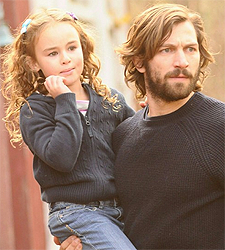
knife sharpening booth. Imagine a man wearing flannel and holding a baby while
talking about ethical alternatives to quinoa.
Farmer’s Market Hot™.
Add this to your vocabulary.
It’s that time of the year again, so I felt the need to bring this back.
During the first half of the 20th century, policewomen in America often worked undercover, on so-called “women’s beats.” “They are called upon regularly to trail or trap mashers, shoplifters, pickpockets and fortune-tellers; to impersonate drug addicts and hardened convicts, to expose criminal medical practice, find lost persons, guide girls in trouble, break up fake matrimonial bureaus and perform special detective duty,” wrote the New York Times.
For most of her career, Mary would be assigned to the NYPD pickpocket squad. By the time of her retirement in 1957, she would be a first grade detective, with over 1,000 arrests under her belt.
Sometimes, the policewoman would take her niece to work with her: “I would be a decoy for her. She didn’t look like a detective looking for a pickpocket, she was a mother out with her daughter.”