Why doesn’t American History teach more about the fact that we literally put people of Japanese descent into concentration camps during world war 2
Because American History (at least in k-12) is more about indoctrinating the idea that America has been and always will be Great and that anything bad was only temporary and we’re over that now, and look how Special and Enlightened we are.
Parents’ beliefs about whether failure is a good or a bad thing guide
how their children think about their own intelligence, according to new
research from Psychological Science, a journal of the Association for Psychological Science.
The research indicates that it’s parents’ responses to failure, and not
their beliefs about intelligence, that are ultimately absorbed by their
kids.
“Mindsets—children’s belief about whether their intelligence is just
fixed or can grow—can have a large impact on their achievement and
motivation,” explains psychological scientist Kyla Haimovitz of Stanford
University, first author on the study. “Our findings show that parents
can endorse a growth mindset, but they might not pass it on to their
children unless they have a positive and constructive reaction to their
children’s struggles.”
Despite considerable research on mindsets, scientists have found
little evidence to suggest that intelligence mindsets are handed down to
children from their parents and teachers. Haimovitz and psychology
researcher Carol Dweck, a pioneer in mindset research, hypothesized that
parents’ intelligence mindsets might not transfer to their kids because
they aren’t readily observable. What kids might see and be sensitive
to, the researchers speculated, is their how parents feel about failure.
Haimovitz and Dweck surmised that parents convey their views about
whether failure is positive or negative through their responses to their
children’s setbacks. For example, parents who typically show anxiety
and concern when their kids come home with a poor quiz grade may convey
the belief that intelligence is mostly fixed. Parents who focus instead
on learning from the poor grade signal to their kids that intelligence
can be built through learning and improvement.
In one study, the researchers asked 73 parent-child pairs to answer a
series of questions designed to tap into their individual mindsets. The
parents rated their agreement with six statements related to failure
(e.g., “Experiencing failure facilitates learning and growth”) and four
statements related to intelligence (e.g., “You can learn new things but
you can’t really change how intelligent you are”). The children, all
4th- and 5th-grade students, responded to similar statements about
intelligence.
As expected, there was no association between parents’ beliefs about
intelligence and their children’s beliefs about intelligence.
However, parents’ attitudes toward failure were linked with
how their kids thought about intelligence. Parents who tended to view
failure as a negative, harmful event had children who were more likely
to believe that intelligence is fixed. And the more negative parents’
attitudes were, the more likely their children were to see them as being
concerned with performance as opposed to learning.
And the researchers found that parents’ beliefs about failure seemed
to translate into their reactions to failure. Results from two online
studies with a total of almost 300 participants showed that parents who
adopted a more negative stance toward failure were more likely to react
to their child’s hypothetical failing grade with concerns about their
child’s lack of ability. At the same time, these parents were less
likely to show support for the child’s learning and improvement. Their
reactions to the failing grade were not linked, however, with their
beliefs about intelligence.
Most importantly, additional data indicated that children were very much attuned to their parents’ feelings about failure.
“It is important for parents, educators, and coaches to know that the
growth mindset that sits in their heads may not get through to children
unless they use learning-focused practices, like discussing what their
children could learn from a failure and how they might improve in the
future,” says Haimovitz.
According to Haimovitz and Dweck, these findings could be harnessed
to develop interventions that teach parents about the potential upsides
of failure, showing parents how they can respond to their children’s
setbacks in ways that are motivating rather than discouraging.
This is such an important thing to teach kids. For the last two years of high school and the first three years of college, I believed 100% that when I got a bad grade it was because I wasn’t smart enough to learn the subject material. Analyzing failures and trying new learning strategies until you improve is a life skill. One of my top five goals as a future parent is to teach this.
Lestrade’s passcode is totally “Greg” because the only person that would try to hack his phone is Sherlock and it’s the one thing Sherlock doesn’t know
Recently I’ve seen lot of posts where McGonagall freaks out when Harry’s
children start Hogwarts and I know it sounds funny but it really bothers me
that some people think this is something she would do.
Let’s just remember that
she:
– fought and survived THREE wars.
– had to deal with the marauders AND Voldemort’s inner circle when they were
young.
– kept the Weasley twins at bay.
– perfectly managed a school full of teenagers when every year a psychopath
tried to kill Harry.
– had to bury most of her dearest and brilliant students.
– had to deal with the fact she is one of the main reasons why the Death Eaters
were really good, she taught them well and then used this knowledge to kill.
– spent months living in constant mortal peril when Snape was headmaster and
never cared about her safety, her main concern were her students.
– HAD TO ALWAYS FIX DUMBLEDORK STUPID MISTAKES BECAUSE HE HAD NO CLUE ABOUT HOW
TO MANAGE A SCHOOL AND ALWAYS KEPT HER IN THE DARK UNTIL THE SHIT HIT FAN THEN
IT WAS HER RESPONSABILITY TO SAVE THE DAY.
– was only “defeated” once and it was because she was fighting
against FOUR Aurors when they tried to arrest Hagrid.
– was feared and respected even by the Death Eaters and the corrupted Ministry
of Magic.
– classy dealt with Dolores Umbridge even when her career was in danger.
Do you really think she would be scared
of a bunch of kids just for their last name?!
Come on! She will be like “Finally! I was getting
really bored”.
Those children are so not ready for
Minerva “McBadass” McGonagall.
McGonagall’s wand is made of fir which is literally called “the survivor’s wand” (x). Even her wand knows that nobody fucks with McGonagall. Remember that time she took multiple Stunning Spells to the chest that should have killed her?
In the same vein as other ‘things humans do that aliens might be weirded out by’ what if human pattern recognition skills were the thing? Like the ability to see a cloud resolve into a dog, or faces in wall patterns. Stuff that evolved from predators having camouflaging abilities, or let’s face it, bugs that can look basicaly like a leaf to prey ON.
Imagine an alien being super confounded by a human being like ‘oh, that control board looks like a face’ and it’s just this big grouping of random lights and line but no ALL the humans on board think it looks like a FACE and theyve started NAMING it. And it just seems so confusing- is there anything on this flat painted wall? ‘No of course not’ HOW IS THERE AN OF COURSE NOT. What about in that galaxy? And the human squints and stares at it and says ‘yeah, it looks like a cat.’
And they an draw out what they’re recognizing in the lines but it’s just so strange.
And then an enemy develops ‘cloaking technology’ that’s based on camouflaging and are so angry that every single human is able to point it out because it’s a completely obvious moving shape to them.
or: alien species are introduced to leaf insects, tigers, and that one octopus that imitates a coconut and freak the heck out.
god I love this kind of post
The Girrami had never known deception until they started expanding into the greater galaxy. They did not like it. The closest word in their home language for deception translated roughly to “speaking before having all the facts”. It had taken time to learn that other races would outright hide information, or worse, speak untruths for their own ends.
It was fortunate, the Girrami thought, that they had resources that the race who called themselves “Humans” desperately needed for medical supplies. The fact that the Girrami had (in line with their overarching philosophy of sharing what was needed) offered these resources freely, without (as the Humans would say) “strings attached”, had made many the Humans quickly warm to the Girrami, and in turn, freely offer the Girrami advice on how to better negotiate.
Human: “Honestly, that was almost embarrassing to watch. Tell you what, you said that you had contact with the Farop?”
Cappa Girrami: “Yes. We have had… difficulties in our dealings with that race.”
Human: “Yeah that must have been like watching puppies walk through a meatgrinder. Those guys are total assholes. Tell you what, your medicine saved my little boy, so I’m willing to do a little quid pro quo. Are you people familiar with the concept of a corporate lawyer? Because I am willing to offer you my services for cheap. No, don’t thank me, this will be my pleasure.”
Humans sometimes had the most odd and upsetting turns of phrase. But once the Girrami started contracting these… lawyers and businesspeople to conduct major negotiations, many of their dealings with other races did seem to be flowing a lot more smoothly.
It did however make the Girrami wonder just how it was that the humans had become so adept at sensing deception. It seemed natural to them to start learning to “lie” and detect untruths from an early age.
And then the Girrami scientists were invited to observe a collection of specimens kept in a “natural history museum” and suddenly it all made sense.
Girrami Scientist 1: “Wait, what is that!?”
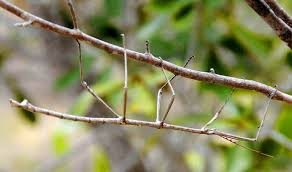
Human: “It’s a stick insect.”
Girrami Scientist 2: “And that?”
Human: “A leaf insect.”
Girrami Scientist 1: “…your insects practice deception?”
Human: “… I guess you could call it that? It’s a form of camouflage.”
Girrami Scientist 2: “What is this…’camouflage’?”
And then the Girrami realised that the Humans came from a planet where deception was so endemic that even plants practiced it.
No wonder the Humans were so good at detecting it.
If I were to ever write any kind of urban/modern magic story, the one piece of worldbuilding that would be non-negotiable for me would be the background presence of a public broadcasting show that is an almost exact replica of The Joy of Painting,but instead it’s The Joy of Summoning.
Just half-hour installments teaching you some different techniques for summoning monsters, malevolent spirits, and even minor demigods, in a gentle and instructional way. There’s a warlock with a fro and a soft voice encouraging you that, contrary to what people think, you don’t have to spend half your life in mage school to summon a demon; all you need is the right tools, a little practice, and a nightmarish vision in your heart. You don’t need to be cursed by a dark entity upon birth: anyone can do it!
“Now, let’s make a happy little blood circle on the floor, just like this. Don’t think about it, don’t measure it out. Doesn’t have to be perfect, it just has to be big enough to hold the hell portal later on. Once we’ve done that we can add some black candles right here, all around it. Look at that! See how easy that is?”
“We always use the same materials, every week. The names of the items you’ll need for this particular ritual are gonna appear right there at the bottom of the screen. If you want to, you can perform a summoning right along with us, or just relax and watch for now.”
“Remember that this is your world, in your world you can create anything that you desire.” (I didn’t even make that one up that is just a straight-up quote from The Joy of Painting)
“Make sure you don’t mix that graveyard dirt and blood of an innocent too much, otherwise you’re gonna lose that texture which is so important. See how I’ve done it just here? You want it to be still be clumpy when you smear it on the mirror. Juuuust like that. Perfect.”
Honestly, a lot of my favourite elements of popular media have come about directly from writers being passive-aggressive.
Let me give you a classic example: Happy Days. For a lot of folks reading this post, it’s probably before your time, but you’re likely to at least be familiar with Fonzie, a supporting character played by Henry Winkler who ended up being so popular that he’s literally the only thing anybody remembers about the show.
Now, if you recognize the name, you might also know that one of Fonzie’s more notable quirks is that he tends to take his motorcycle with him everywhere – even indoors, including many places where there’s no obvious way for him to have gotten it there. What you might not know, however, is why the writers came up with this running gag in the first place.
Y’see, Fonzie was originally conceived as the “bad influence” character – the cool, dangerous bad boy. As part of that characterisation, the writers wanted to have him wear a leather jacket. (Because it was the 1970s, and that counted as edgy back then.) The network censors, however, objected, claiming that allowing him to wear the jacket would encourage juvenile delinquency and gang violence. (Again, it was the 70s.)
Eventually, the writers worked out a deal whereby they’d be allowed to have Fonzie wear the jacket – but only if he was riding or otherwise physically near his motorcycle, since a leather jacket is a common article of safety equipment when operating a non-enclosed vehicle, and we can’t let impressionable kids see somebody riding a motorcycle without proper safety equipment, can we?
Then they just wrote the motorcycle into every scene, regardless of whether it made sense or not, thereby allowing Fonzie to wear the jacket all the time.