It’s a rousing thought to believe we took a few veiled hints from the writers of BBC Sherlock, a few hidden clues, and created the Johnlock universe in our fictions, art works and on our blogs. We have created, exploded with our obsession, become more than we were, but to believe we emerged from a few scattered hints in a television show is to do disservice to the ones that went before us. If our history is ignored we lose validity. God knows, those outside our fandom try and rob us of our agency , we need a strong foundation to stand on, and we have one.
I won’t go into our genesis as Johnlockers here, just a brief reminder that our birth was written into the canon in such things as the flight of Holmes and Watson during the ‘Invert Stings’ of 1895, Holmes dislike of women’s company, Watson’s abandonment of his wife in favour of Holmes, the frequenting of Turkish bath houses, and the sheer desolation of Holmes on Watson’s engagement. Our Victorian counterparts whispered the anathema idea of the true nature of these two men, the homosexual Victorian subculture found solace in the subtext, and Doyle kept delivering, even as he was denied his seat in The House of Lords due to his sympathy for homosexuals. The Holmes and Watson Romantic School of Thiught, underground, grew throughout the early 1900s, cresting with Rex Stout and his essay ‘Was Watson a Woman’. Johnlockers continued to be black balled from the Holmesian Societies, even as writers began to surface the idea in publications such as The Baker Street Journal, until in the 1970s Billy Wilder attempted to free John and Sherlock from the closet. He regretted not being more overt in his film, he bowed to pressures at the time, but we did get some precious glimpses of a gay Holmes. Granada took up the mantle in the 1980s and decided to ignore Watson’s marriage, they gave us a married same sex couple solving crimes. The fanzines and online forums ignited with creativity, Johnlockers began to emerge from their clusters and we became a subsection of a fandom. Finally two men, talking on a train, had the idea to modernise Sherlock Holmes and fix the wrongs done over the past 135 years.
Moffat and Gatiss had a plan and it was taken up by the BBC, it was timely, meeting an agenda, the project orchestrated and with ASiP the Johnlock community erupted on line. Our creativity stoaked by the show, in its visual tropes, it’s obvious direction, the brilliant casting of the two leads, the costuming and hair of a Byronic Sherlock, the music and the hints of suggestion by a well run PR campaign. We were led by the nose. We didn’t create Johnlock, it had been there all along, only now two of our members were in control of the project, had an international forum, and were challenging us to create. And create we did, aided by technology, we expanded with every episode. Anyone who thinks we are just going on vague hints and wishful thinking doesn’t truly understand the art of manipulation. Manipulation in a good way. We are being led and always have been, from Doyle to Moffat and Gatiss, we are willing fulfilling the agenda.
I knew Johnlockers who lived and loved Sherlock and John in the 1950s, they were as obsessed and creative as we are, they just didn’t have our outlets. Don’t rob those before us of their contribution.
I was having a look at this post here when the thought dawned on me
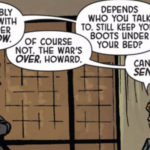
In last night’s episode, Edwin stated that he did not want to spend his time as a disembodied voice. That’s quite the little nod to modern JARVIS and I loved it. But then, the quote was coupled with the above gif and it got me thinking. Tony was very close to Edwin, and likely the man helped raise him. Understandable. But what really struck me here is that Tony asks if JARVIS is “up”. And JARVIS replies “For You, sir, always.” My question is: why would an AI system need to sleep?
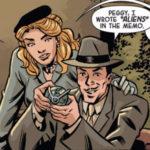
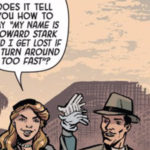
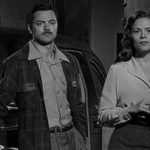
Now, let me just add something else in here. I had a theory from Season 1 of Agent Carter that Ana Jarvis was an AI. That was how Howard “saved” her from the war and that’s why we never saw her on screen. We only heard her…like modern JARVIS. In said theory (though I don’t know how the science would have worked), Ana would have died in the war – or nearly – and Stark would have “preserved” her in a way that she could only be a voice. Unfortunately, my theory was not correct (but I still think it would have been cool) and Ana is a real person.
Keeping the above in mind, take a look at this:
Note a couple of things
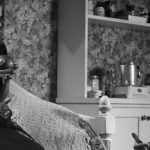
1) The newspaper is dated 1991. Tony Stark was born in 1970 and thus would have been 21 at the time. Old enough to be a scientific genius, capable of creating very new and revolutionary technology. 1991 would have also made Edwin Jarvis in his 70′s (given he’s a similar age to Peggy who was born in 1921).
2) Note the words circled in yellow. “The car was nearly totaled. It took the wrecking crew several hours to…” This accident was NOT pretty.
Now, it was pointed out to me here that Edwin Jarvis may have been the one driving the Starks on that tragic day. Before then I was so in denial that Edwin could ever die of anything other than natural causes, that I completely overlooked this possibility. What if it’s true? What if Jarvis was involved in the crash? But what if he didn’t die – not completely, at least…
That makes the connection back to my theory and the gif about Tony. Maybe Howard and Maria were dead on impact, but what if Edwin wasn’t? What if it was possible that Tony arrived on scene and found Edwin barely breathing. We know how much JARVIS means to Tony and that can only be a reflection of how important Edwin was in his life. And so, Tony would have done everything in his power to save him. Everything being turning him into a disembodied voice. Somehow, Edwin stayed alive long enough for Tony to transform him into technology. His physical self wasn’t salvageable, but his mind and voice were. Perhaps I am way off, but what if that’s the way Edwin Jarvis became JARVIS. And that’s why Tony is so close with his AI system, because he’s more than an AI, he’s in a sense still Edwin Jarvis, saved by Tony Stark by the only means he could.