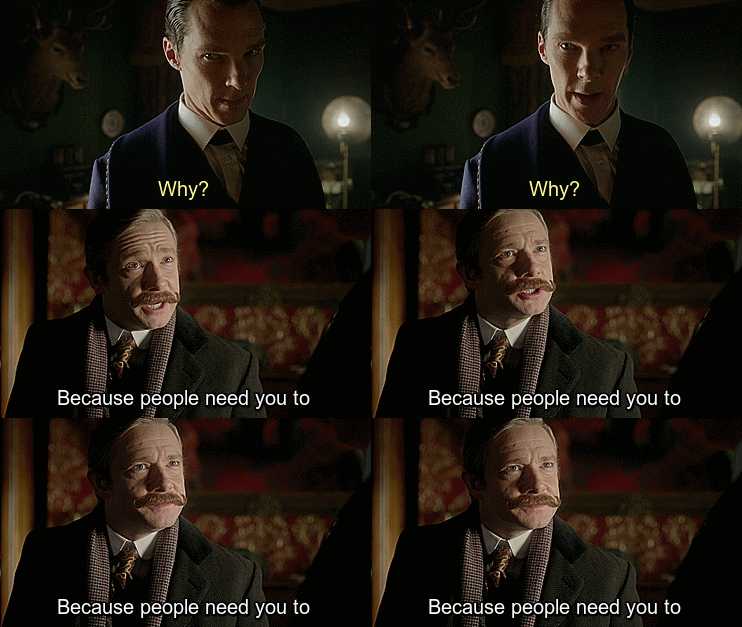
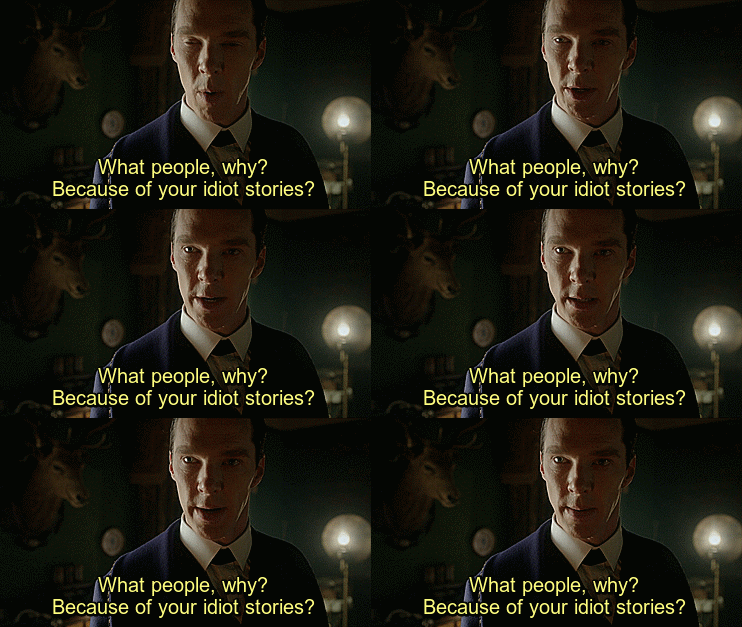
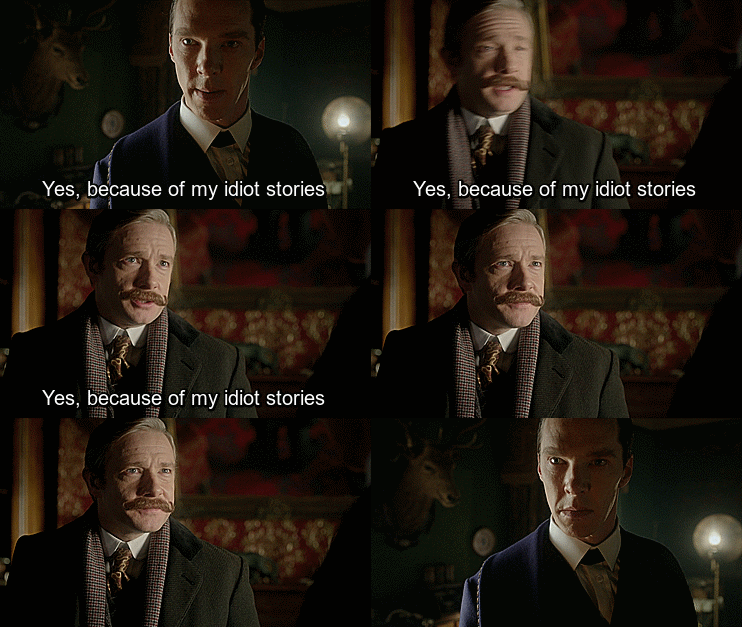
The Abominable Bride is about how writing saved Sherlock Holmes, among other things.
Sherlock does better when he sees himself through John’s eyes. He knows how he appears because he reads John’s writing about him. Some parts of himself aren’t even real to him until he sees them mirrored back to him from John. He doesn’t even know how he talks until people tell him John has transcribed him correctly. Hold yourself to a higher standard because of John’s stories, Sherlock.
In other words: Thank you, Moffat and Gatiss, for writing Sherlock Holmes and keeping him alive.
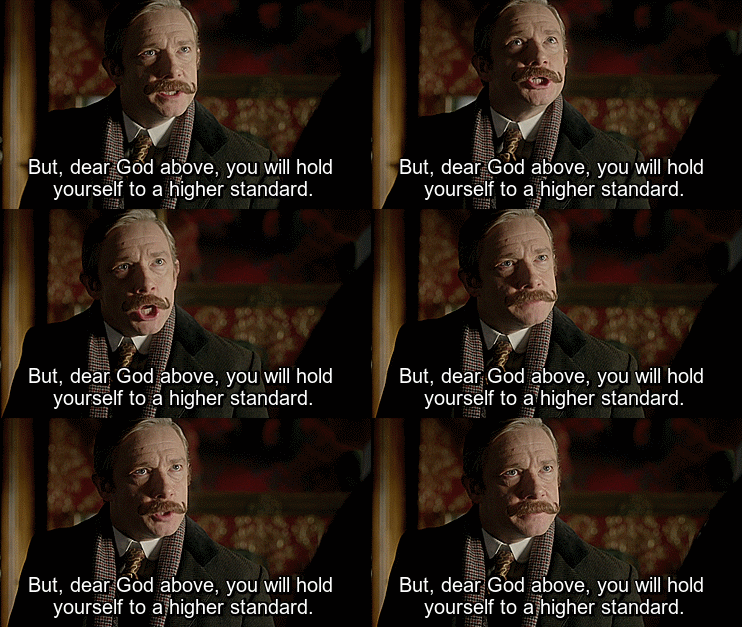
Whichever of you wrote “You will hold yourself to a higher standard,” thank you for what were, for me, the deepest, most stirring notes in this episode.
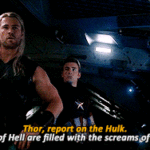
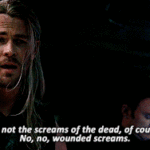
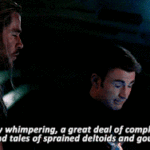
Yes. All of this! Very much all of this! This is all I could think about while giffing this yesterday:
If you wish to take part in any fandom, you need to accept and respect these three laws.
If you aren’t able to do that, then you need to realise that your actions are making fandom unsafe for creators. That you are stifling creativity.
Like vaccination, fandom only works if everyone respects these rules. Creators need to be free to make their fanart, fanfics and all other content without fear of being harassed or concern-trolled for their creative choices, no matter whether you happen to like that content or not.
The First Law of Fandom
Don’t Like; Don’t Read (DL;DR)
It is up to you what you see online. It is not anyone else’s place to tell you what you should or should not consume in terms of content; it is not up to anyone else to police the internet so that you do not see things you do not like. At the same time, it is not up to YOU to police fandom to protect yourself or anyone else, real or hypothetical.
There are tools out there to help protect you if you have triggers or squicks. Learn to use them, and to take care of your own mental health. If you are consuming fan-made content and you find that you are disliking it – STOP.
The Second Law of Fandom
Your Kink Is Not My Kink (YKINMK)
Simply put, this means that everyone likes different things. It’s not up to you to determine what creators are allowed to create. It’s not up to you to police fandom.
If you don’t like something, you can post meta about it or create contrarian content yourself, seek to convert other fans to your way of thinking.
But you have no right to say to any creator “I do not like this, therefore you should not create it. Nobody should like this. It should not exist.”
It’s not up to you to decide what other people are allowed to like or not like, to create or not to create. That’s censorship. Don’t do it.
The Third Law of Fandom
Ship And Let Ship (SALS)
Much (though not all) fandom is about shipping. There are as many possible ships as there are fans, maybe more. You may have an OTP (One True Pairing), you may have a NOTP, that pairing that makes you want to barf at the very thought of its existence.
It’s not up to you to police ships or to determine what other people are allowed to ship. Just because you find that one particular ship problematic or disgusting, does not mean that other people are not allowed to explore its possibilities in their fanworks.
You are free to create contrarian content, to write meta about why a particular ship is repulsive, to discuss it endlessly on your private blog with like-minded persons.
It is not appropriate to harass creators about their ships, it is not appropriate to demand they do not create any more fanworks about those ships, or that they create fanwork only in a manner that you deem appropriate.
These three laws add up to the following:
You are not paying for fanworks content, and you have no rights to it other than to choose to consume it, or not consume it. If you do choose to consume it, do not then attack the creator if it wasn’t to your taste. That’s the height of bad manners.
Be courteous in fandom. It makes the whole experience better for all of us.
you know what’s weighing on my heart? Sherlock. I feel even closer to the character now. Who he is, and who he is trying to be. His defences and insecurities, his nobler aspirations. His paralysing fear of the fly in the ointment, his bravery in the face of ridicule. Sherlock Holmes discovering his capacity to love (and by god, he can love).
I think what the Special did for us (or me, at least) is to remind us why he is the titular character, and reveal the depths to which we empathise and identify with him. To get into the tortured mind of this lonely, scared, and utterly human genius, and find reflected in his self-doubt our own. This was tptb hammering the point home, not a detective show, a show about a detective, the most universal story ever told of a protagonist: who am I? And everything else flows from there.
So please please please, don’t hold back from spreading your love for this show and Moftisson, or for Sherlock Holmes and John Watson and their extraordinary love story, or any other passion (on tumblr or at home or wherever else). There will be the inevitable chorus of ‘lol why do you care so much’ (as if that’s what needs to be fixed with thisworld, that people care ‘too’ much), but you just keep loving what you love and drown that shit out.
Has anyone gone through this yet? Because the fact that Mary didn’t get to be a bride on screen has been plaguing me for the last 24 hours.
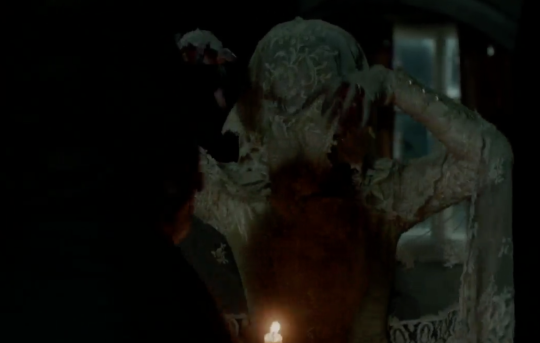
Sherlock has that moment at the end, before Moriarty raises the veil, where he’s mirroring that moment in His Last Vow.
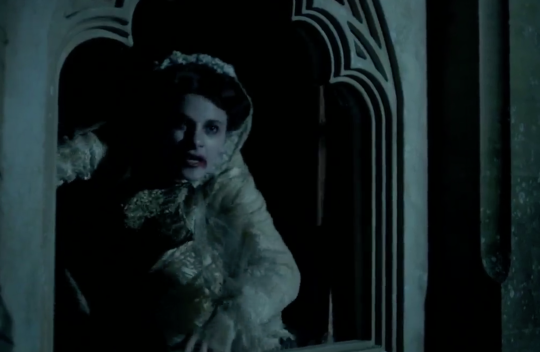
Mary is the only one of the women that we didn’t get to see as the bride–and we know Lady Carmichael didn’t kill her own husband because she was literally in the room with Sherlock when John saw the bride, yes? Sherlock assumes later that it was Molly who climbed out the window–but why couldn’t that have been Mary?
That particular bride even crops up scaring John in the editing when Sherlock’s “the women we have lied to, betrayed, ignored” line is delivered. John and the bride are on screen for “ignored.” Who has John been ignoring?
The fact that there was a “Miss me?” note on the corpse would support this theory, as well, if you’re of the belief that Mary is the “new” Moriarty. None of the other corpses had notes–why this one, if it wasn’t someone trying to send a message to Sherlock Holmes? (Like the Study in Pink suicides, there was only one note–and it was the one that started Sherlock on the path to Moriarty.)
So Sherlock is asking the Moriarty-bride, who has come specifically out to see him, why she engaged him in the case when she intended to commit the murder herself. He’s so sure it’s Lady C., but at the same time, he’s confused–he says it doesn’t make sense.
And the way he delivers this line is very similar to his delivery of the Lady Smallwood line in HLV. His reaction is similar, as well–he’s shocked. He says explicitly “It can’t be you.” He’s thrown the same way he was when Mary turned around and revealed herself as the person training a gun on Magnussen. Then that string of his mind palace starts to come undone and he “wakes up.”
But Sherlock’s subconscious is starting to put it together–it had to be Moriarty who committed the murder, but not Moriarty as Sherlock knows him.
Even when Sherlock starts to “wake up,” Moriarty’s line “You’re dreaming” is immediately said by Mary. Sherlock’s brain is connecting Mary to Moriarty–especially given the fact that we now know he was still in the mind palace when he heard Mary/Moriarty say “You’re dreaming.”
None of it makes sense to his brain because Moriarty is the “virus in the data.” He’s infiltrating in places where Sherlock’s brain seems too afraid to actually see the truth, the same way Sherlock saw Moriarty in Hound. Almost all the other episodes had direct parallels in this one, but Hound didn’t get one beyond the short mention at the beginning (”the dog one”) and the “once you’ve eliminated the impossible” bit with the ghost. But in Hound, Sherlock saw Moriarty in place of the scientist fellow whose name I can’t remember.
Here, he sees Moriarty in place of Mary.
And then, just like in Hound, he blinks it away and sees the person he’s meant to see. Sherlock “wakes up” and sees Mary.
I’m going to agonize over this for the next year, aren’t I?
I think you should be really proud of this, actually. Nicely done.
Yes, great point. Totally agree.
Also (and I have no spot to back myself up, so I could technically be wrong): I’m pretty sure everyone on the plane gets a mirrored line with their 1985 counterpart except Mary.
Sherlock has one, John has “morphine or cocaine?”, and Mycroft has “Did you make a list?”
Mary’s mirrored line is “You’re dreaming.” And it’s a mirror of Moriarty.